Fresh water is the most valuable resource on the open sea. Comfort on a luxury yacht is measured not only by interior design but also by the quality of water flowing from the tap. Crew health and guest satisfaction depend on a reliable water management system. Cruising for long periods without relying on ports is possible when the vessel can produce its own water. Professional systems in the maritime industry secure the process from production to the glass, maintaining the hygiene chain.
Turning Seawater into Fresh Water: Watermakers
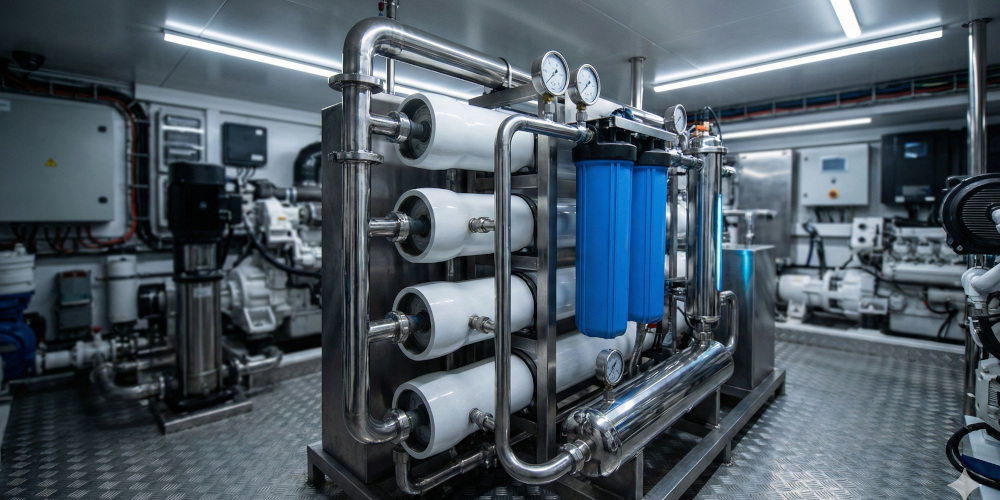
The most common and efficient method for fresh water supply on boats is "Reverse Osmosis" technology. These systems force seawater through a semi-permeable membrane under high pressure. Salt, minerals, and particles are trapped in the membrane; pure water is sent to the tank.
Capacity Planning and Energy Efficiency
Correct watermaker selection depends on the number of people on board and daily consumption habits. On an average superyacht, daily water consumption per person (including showers, cleaning, and galley) is between 150-300 liters. The device's capacity should meet this need in a short time while the engine is cruising or the generator is running. New generation watermakers with energy recovery systems reduce electricity consumption by 40%. These devices also increase comfort with their quiet operation.
Hygiene Risks in Storage Tanks
Producing water is only the first step of the process. Serious biological risks arise during the storage and circulation of produced water. Stagnant water is an ideal environment for bacterial growth.
Biofilm and Legionella Threat
Over time, a slippery layer called "biofilm" forms on the inner surfaces of water tanks and pipelines. This layer harbors dangerous bacteria like Legionella. Legionella enters the respiratory tract through water droplets (aerosols) from showerheads and causes serious lung infections. Tank material selection is critical to manage this risk. Compared to polyethylene or fiberglass tanks, 316L grade stainless steel tanks make bacterial adhesion difficult with their smooth surfaces.
Tank Cleaning and Circulation
Water waiting in the tank for a long time degrades in quality. Regular circulation pumps ensure the water moves. Additionally, shock chlorination or ozonation processes performed before and after the season clean the biofilm layer in the pipelines.
Filtration and Disinfection Technologies
Water must be processed again on its way from the tank to the tap. This stage ensures the water reaches "drinkable" quality.
UV (Ultraviolet) Disinfection
The most effective method providing sterilization without using chemicals is UV filters. UV light passing through the water disrupts the DNA structure of bacteria and viruses, preventing them from reproducing. A UV unit installed at the hydrophore outlet guarantees safety at the final point. It does not change the taste or smell of the water.
Carbon and Particle Filters
Water waiting in the tank can sometimes develop an odor. Activated carbon filters remove organic compounds and chlorine residues from the water, eliminating odors. Particle filters prevent sediments that may come from the installation.
Table 1: Comparison of Common Disinfection Methods on Yachts
|
Method |
Mechanism |
Advantages |
Disadvantages |
|
UV Light |
Physical (DNA Disruption) |
No chemicals, no taste change |
No residual protection in water (Instant effect) |
|
Chlorination |
Chemical |
Long-term protection in tank, cheap |
Leaves taste and odor, risk of dosage error |
|
Silver Ion |
Chemical/Physical |
Long-term protection, odorless |
Slow action time, high cost |
|
Ozonation |
Oxidation |
Very strong disinfection |
High equipment cost, requires expertise |
Reducing Plastic Use: Purified Drinking Water
Traditionally, yachts stock thousands of plastic water bottles. This situation creates a significant loss of storage space and increases the environmental waste load. Modern yachting concepts are turning towards on-site purification systems.
"Point-of-Use" purifiers integrated into kitchen counters or bars turn tank water into high-quality drinking water by passing it through mineral filters. These systems can even chill the water or make it sparkling. By including these units in modern kitchen projects, plastic bottle traffic and logistical burdens are eliminated.
Sustainable and Safe Water Management
Water safety at sea cannot be left to chance. A watermaker of the correct capacity, stainless steel storage tanks, and a multi-stage (UV + Carbon) filtration system must work in integration. Regular maintenance of this system, filter changes, and membrane cleaning extend the equipment's life. Training the crew on this subject prevents operational errors.
Clean water is not just a vital need but a quality standard of the yachting experience. Professional technical infrastructure solutions ensure sea lovers meet this standard. Healthy water systems are the cornerstone of a peaceful and uninterrupted blue voyage.