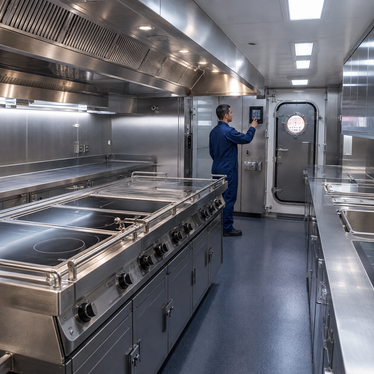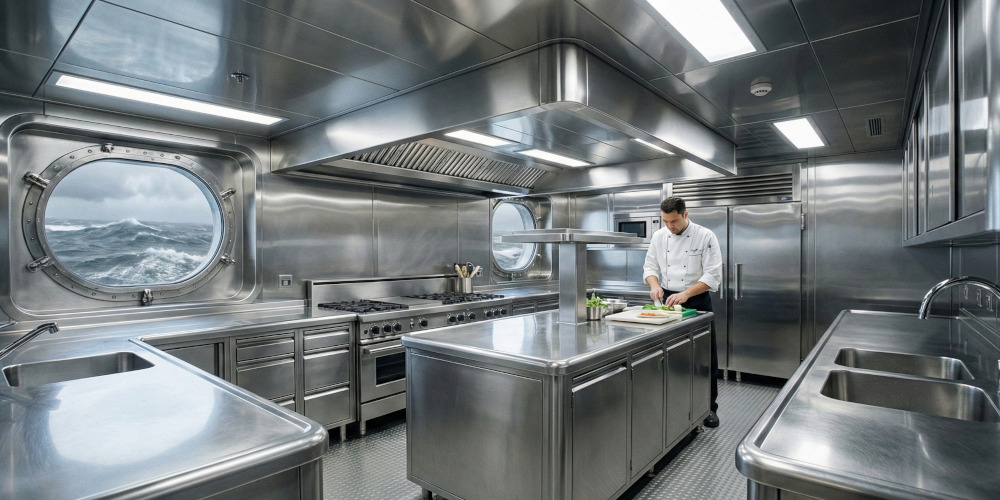
The engineering of a safe and durable shipboard culinary space begins at the metallurgical level. The marine environment presents one of the most hostile conditions for metallic structures, characterized by constant high humidity, severe salinity, extreme temperature fluctuations, and continuous mechanical vibration. Consequently, specifying the correct marine kitchen equipment materials is not merely an aesthetic choice, but a fundamental safety and operational requirement. Standard commercial kitchen materials will rapidly degrade when exposed to the corrosive ocean atmosphere, leading to structural failures, hygiene breaches, and costly mid-voyage replacements. Achieving long-term operational stability requires a rigorous understanding of metallurgy, specifically the science of stainless steel alloys and their behavior in chloride-rich environments.
The Impact of Saltwater on Metal Surfaces
The primary adversary of any maritime infrastructure is airborne salt, specifically chloride ions. When saltwater evaporates or is carried by ocean breezes into the vessel's ventilation systems, these microscopic chlorides settle on galley surfaces. Chlorides are highly aggressive and actively attack the passive chromium oxide layer that naturally protects stainless steel. Once this passive layer is breached, localized electrochemical reactions occur, leading to two devastating forms of degradation: pitting corrosion (microscopic holes that penetrate deep into the metal) and crevice corrosion (rapid decay in tight, stagnant spaces like overlapping joints or under bolt heads). Superior corrosion resistance marine specifications are absolutely vital to combat this relentless chemical attack and maintain a sanitary food preparation area.
304 vs. 316L Stainless Steel: The Technical Distinction
The cornerstone of stainless steel marine equipment lies in the distinction between Grade 304 and Grade 316L. While 304 stainless steel is the standard for land-based commercial kitchens, it is fundamentally inadequate for long-term marine exposure due to its lack of molybdenum. Grade 316L, however, is alloyed with 2% to 3% molybdenum, an element that drastically increases the metal's resistance to chloride-induced pitting.
Furthermore, the "L" in 316L stands for "Low Carbon" (maximum 0.03% carbon content). During the intense heat of welding, standard carbon levels can cause chromium carbide precipitation, depleting the chromium near the weld and creating a highly localized zone vulnerable to rapid corrosion. The low carbon content in 316L prevents this, ensuring the welded seams remain just as corrosion-resistant as the main sheet metal. The foundation of durable marine galley equipment relies strictly on the uncompromising use of AISI 316L stainless steel for all structural and contact surfaces.
Maintenance Requirements and Longevity Criteria
Despite its exceptional resistance, 316L stainless steel is "stain-less," not stain-proof; it still requires specific maintenance protocols to reach its maximum lifespan. The most critical requirement is preserving the metal's passive oxide layer. This means routine cleaning must be performed using fresh water, mild detergents, and non-abrasive tools. The use of ordinary steel wool or carbon steel brushes is strictly prohibited in marine galleys, as they will embed free iron particles into the stainless steel surface, instantly triggering aggressive rust streaks (rouge).
Longevity is also engineered through surface finishes. Electropolished or fine-brushed surfaces (such as a No. 4 finish) minimize microscopic peaks and valleys where salt and moisture can accumulate. By combining the correct metallurgical specification (316L) with intelligent mechanical design (radiused corners, seamless welds) and strict chemical maintenance, ship operators can ensure their galley infrastructure withstands the punishing marine environment for the entire lifecycle of the vessel.