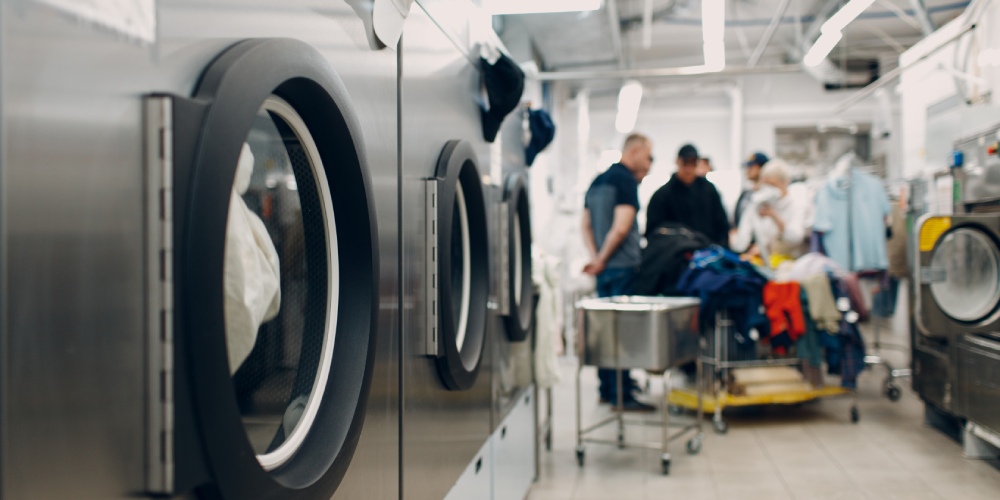
Guests on a superyacht demand 5-star hotel comfort while on the open sea. Flawless sheets, soft towels, and pristine staff uniforms are essential parts of this luxury experience. However, managing laundry on yachts is much more complex than in land-based facilities. Limited space, restricted water reserves, and energy constraints make using standard domestic machines impossible. UNOKS turns this difficult equation into efficiency with industrial solutions offered to maritime professionals.
Why Industrial Marine Equipment, Not Domestic?
Yacht owners sometimes turn to domestic appliances to save costs. However, sea conditions turn these machines into scrap in a short time. Professional marine series equipment stands out with three main differences: Speed, Durability, and Safety.
Durability and Corrosion Resistance
Sea air is salty and causes rapid corrosion on metal surfaces. Marine-type machines are manufactured from high-quality stainless steel. Internal components are isolated against constant vibration and humidity. While a domestic machine is designed to run 1-2 times a day, industrial machines can operate 24/7 without interruption.
Speed and Cycle Times
Laundry circulation for the crew and guests is intense. Professional machines reduce washing time to 45-50 minutes thanks to powerful heaters and special water inlets (hot/cold water connection). In domestic machines, this time can reach 2 hours.
Table 1: Comparison of Domestic vs. Professional Marine Machines
| Feature | Domestic Washing Machine | Professional Marine Machine |
|---|---|---|
| Lifespan | ~3,000 Cycles | ~30,000 Cycles |
| Washing Time | 90 – 120 Minutes | 45 – 60 Minutes |
| Water Connection | Usually Cold | Hot and Cold (Saves energy) |
| Vibration Control | Low | High (Shock absorber systems) |
| Maintenance | Difficult (Spare parts issue) | Easy (Service-friendly design) |
Washing Technologies and Vibration Management
The floor is not stable on yachts. A high-speed machine working in rough seas creates vibrations that can damage the hull. Engineers developed two different mounting types to solve this problem.
Soft Mount Systems
These machines have strong shock absorbers and springs inside. They absorb 95% of the vibration. They do not require fixing to the floor, making them ideal for yachts. They reach high spin speeds (G-Factor) and remove moisture from laundry significantly. This reduces drying time and energy consumption.
Hard Mount Systems
These machines must be bolted to a concrete or steel base. They transmit vibration directly to the floor. Their use on yachts is limited depending on the hull structure and insulation. They are generally lower cost, but installation requires expertise.
Drying and Ironing: Extending Fabric Life
Washing is only half the process. The main energy consumption on yachts occurs during the drying stage.
Heat Pump Dryers
Traditional condenser dryers heat the environment and draw high energy. Heat pump dryers work with a closed-loop system. They recover energy and provide up to 60% savings. Also, since they do not heat the ambient air, they lighten the air conditioning load in narrow laundry rooms. They dry at low temperatures, extending the life of delicate fabrics and staff technical wear.
Rotary Ironers
Tablecloths and bed linens on yachts must be flawless. Ironing these wide surfaces with a hand iron takes hours. Rotary ironers dry and iron damp sheets in a single pass. A single operator can iron tens of kilograms of laundry perfectly in an hour. Rotary ironers in the UNOKS portfolio do not take up space when not in use thanks to their foldable structure.
Space Saving: Stackable Systems
Every square centimeter is valuable in yacht design. The laundry is usually located on the lower deck in a narrow area. "Washer-Dryer Stacks" ensure efficient use of this space. Two machines are mounted on top of each other with a special kit. This kit isolates the vibration between the two machines and offers safe usage.
A professional laundry installation is not just a machine choice; it is an engineering project. Water drain line diameters, electrical load calculations, and ventilation ducts must be planned correctly. UNOKS develops custom projects for yacht needs with global brand partners (like Miele Marine). The right system increases staff satisfaction, reduces textile costs, and maximizes the quality of life at sea.