On modern vessels, the galley is one of the most energy-intensive departments, often rivaling the propulsion system in its demand for power during peak hours. As maritime regulations like the EEXI (Energy Efficiency Existing Ship Index) tighten, reducing the "hotel load" becomes a technical necessity. A significant portion of this load comes from cooking, refrigeration, and ventilation. By implementing smart engineering choices and selecting high-performance marine galley equipment, operators can drastically lower fuel consumption and carbon emissions without compromising culinary standards.
The Power of Induction: High Efficiency, Low Heat
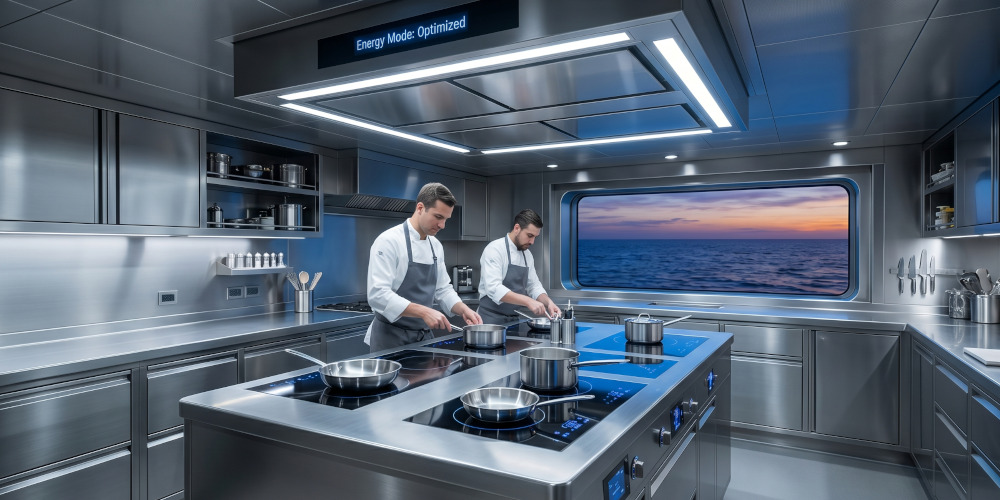
The most effective way to reduce energy consumption in a ship's kitchen is the transition from traditional electric radiant hobs to induction technology.
-
Direct Heat Transfer: While traditional electric plates waste a large percentage of energy heating the air around the pot, induction transfers nearly 90% of its energy directly to the cookware.
-
Reduced HVAC Load: Traditional hobs act as massive space heaters, forcing the ship’s air conditioning (HVAC) system to work overtime to cool the galley. Induction remains cool to the touch, significantly lowering the ambient temperature and the associated cooling costs.
-
Instant On/Off: Induction hobs stop consuming energy the moment the pan is removed, eliminating the common practice of leaving electric plates "on" throughout a service shift.
Smart Ventilation and Heat Recovery
Ventilation hoods are essential for safety and comfort, but they are also major energy consumers. They draw large volumes of conditioned air out of the ship, which must then be replaced and cooled or heated.
-
Demand-Controlled Ventilation (DCV): Integrating sensors that detect smoke, steam, or heat allows ventilation fans to adjust their speed automatically. Operating fans at 50% capacity when the kitchen is slow can save up to 70% in fan energy.
-
Heat Recovery Systems: Advanced marine hoods can be equipped with heat exchangers. These systems capture the waste heat from exhaust air and use it to pre-heat the vessel’s domestic hot water supply, turning a waste product into a valuable energy resource.
High-Efficiency Equipment and Stainless Steel Performance
Longevity and efficiency go hand-in-hand. The thermal properties of the materials used in galley furniture and appliances play a subtle but vital role in energy management.
-
Insulated Cooking Units: High-quality ovens and bratt pans built with thick, marine-grade insulation ensure that heat stays inside the cooking chamber. This reduces the energy needed to maintain temperature and speeds up cooking times.
-
A-Grade Refrigeration: Marine-spec refrigerators must handle high ambient temperatures. Investing in units with high-efficiency compressors and superior door seals prevents cold air leakage, which is a leading cause of energy waste in humid sea environments.
-
The 316L Advantage: Using AISI 316L stainless steel ensures that surfaces remain smooth and easy to clean. Build-ups of grease or salt on heating elements or ventilation grilles act as insulators, forcing motors and heaters to work harder.
Operational Best Practices for Daily Savings
Technical upgrades are most effective when paired with disciplined operational habits. Small changes in crew behavior can lead to measurable cumulative savings.
-
Staggered Start-ups: Avoid turning on all heavy equipment simultaneously. Staggering the start-up of ovens and fryers prevents massive energy spikes that put unnecessary strain on the ship's generators.
-
Preventative Maintenance: A leaking gasket on an oven door or a dusty condenser coil on a fridge can increase energy use by 20%. Regular inspections are a fundamental energy-saving strategy.
-
Full-Load Cooking: Encourage the use of combi-ovens at full capacity. Cooking in batches rather than multiple small runs reduces the number of heating cycles required.
A Leaner, Greener Galley
Reducing energy consumption in marine galleys is a multi-layered challenge that involves choosing the right technology and maintaining a rigorous operational standard. By prioritizing induction cooking, smart ventilation, and high-quality, insulated equipment, vessel owners can achieve a dual victory: lower operational costs (OPEX) and a smaller environmental footprint. In the era of sustainable shipping, an efficient galley is no longer an option—it is a hallmark of superior ship management.