A modern superyacht resembles a floating city. Air conditioning systems, watermakers, galley equipment, and navigation devices demand constant energy. Rising fuel costs and stricter environmental emission regulations have made energy efficiency a necessity rather than a choice. With correct engineering solutions and smart management systems, it is possible to reduce a yacht's energy consumption by up to 30%.
Hybrid Propulsion and Power Management Systems
Traditional diesel engines operate inefficiently, especially at low speeds. The maritime industry is turning to hybrid technologies, similar to the automotive sector, to prevent this loss.
Diesel-Electric Systems
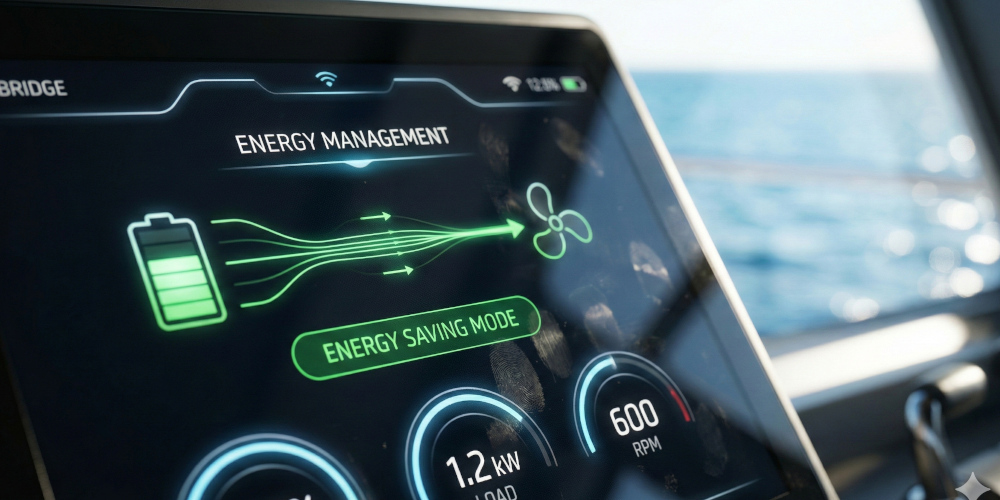
In diesel-electric systems, main engines act as generators to produce electricity instead of turning the propeller directly. Electric motors drive the propellers. This system ensures engines always run within their most efficient RPM range. It also offers the possibility of silent and vibration-free propulsion using only battery power during harbor maneuvers or low-speed cruising.
Peak Shaving
Energy demand on yachts fluctuates. For instance, a sudden load spike occurs when air conditioning compressors activate or all ovens in the galley turn on. Lithium-ion battery banks with "Peak Shaving" technology handle these sudden loads. Thus, the generator does not need to ramp up, or a second generator is prevented from starting. Generators run at a constant and optimal load, saving fuel.
HVAC and Insulation
Approximately 50% of a yacht's total energy consumption goes to HVAC (Heating, Ventilation, and Air Conditioning) systems. The smallest improvement here contributes significantly to overall efficiency.
Heat Recovery Systems
Generators produce a large amount of waste heat while running. In traditional systems, this heat is expelled through exhaust or seawater. Heat recovery units capture this waste energy and use it to heat domestic water (showers, galley). Consequently, electric boilers do not need to run to heat water.
Window Films and Thermal Insulation
Sunlight enters through large glass surfaces, heating the interior (greenhouse effect). This causes air conditioners to work harder. Special marine films blocking UV and IR (Infrared) rays reduce the heat load by up to 60%. Additionally, high-quality insulation materials used on the hull and pipelines prevent energy leakage.
Lighting and Smart Automation
Old-type halogen or fluorescent lamps convert most energy into heat, not light.
-
LED Conversion: Switching all interior and exterior lighting to LED technology reduces lighting-related energy consumption by 80%. Also, since LEDs do not emit heat, they lighten the air conditioning load.
-
Presence Sensors: Sensors used in cabins and corridors automatically switch lights and air conditioning to "Eco" mode when the area is vacant.
-
Central Control: Smart automation systems monitor energy consumption instantly. They turn off unnecessary devices or issue warnings.
Table 1: Comparison of Traditional vs. Energy Efficient Yacht Systems
|
System |
Traditional Method |
Energy Efficient Method |
Estimated Savings |
|
Propulsion |
Direct Diesel Shaft |
Hybrid / Diesel-Electric |
15% - 20% (Fuel) |
|
Water Heating |
Electric Resistance |
Waste Heat Recovery |
10% - 15% (Electricity) |
|
Lighting |
Halogen Bulb |
LED Technology |
75% - 80% (Lighting load) |
|
Stabilization |
Hydraulic Fin |
Electric Fin or Gyro |
10% (Generator load) |
Propeller and Hull Efficiency
Energy efficiency is achieved not only in the engine room but also underwater. The lower the vessel's friction resistance, the less fuel it consumes to move.
Antifouling Selection
Algae and barnacles accumulating on the hull increase friction, reduce speed, and can increase fuel consumption by up to 30%. New generation silicone-based or hard antifouling paints keep the surface smooth.
Propeller Optimization
The design and cleanliness of propeller blades are critical. A damaged propeller or one causing cavitation (air bubble formation) cannot fully transfer engine power to the water. Regular propeller maintenance and correct pitch adjustment ensure the engine runs at an efficient RPM.
The Route to the Future: Sustainability
Energy efficiency on yachts is not just about lowering the fuel bill. It means a quieter cruise, less vibration, and longer maintenance intervals. Technologies like solar panel integration, wind generators, and hydrogen fuel cells are also starting to enter the sector.
An "Energy Audit" to make your current vessel more efficient shows where leaks are and which investments provide the fastest return on investment (ROI). Protecting the seas begins with using them efficiently.