The operational architecture of modern marine laundry systems demands a rigorous analysis of power utilization, as these heavy-duty installations represent one of the most significant continuous electrical and thermal loads on a vessel's power generation grid. Unlike shore-based facilities, a ship operates within a finite energy envelope where every kilowatt-hour (kWh) consumed directly impacts fuel expenditure and emissions. Analyzing marine laundry energy consumption requires dissecting the thermodynamic processes of water heating, mechanical extraction, and air drying to identify inefficiencies. Optimizing these parameters is no longer just a cost-saving measure; it is a critical component of complying with the IMO’s Carbon Intensity Indicator (CII) regulations. Maximizing ship laundry efficiency ensures that the vessel maintains high operational readiness while aggressively minimizing its environmental footprint.
Thermal Dynamics of Water Heating
Water heating accounts for approximately 70% of the energy consumed during a standard industrial wash cycle. Elevating the temperature of hundreds of liters of fresh water from an ambient 15°C to the 65°C or 85°C required for thermal disinfection draws massive electrical spikes if managed inefficiently. Marine laundry systems mitigate this by utilizing programmable microprocessors that precisely dose steam or regulate electrical heating elements based on the exact weight of the load. Furthermore, ozone injection technologies are increasingly utilized to achieve sterilization at lower temperatures (e.g., 30°C to 40°C), drastically reducing the thermal energy requirement without compromising the stringent hygiene standards required for marine textiles.
Electrical Load in Drying Operations
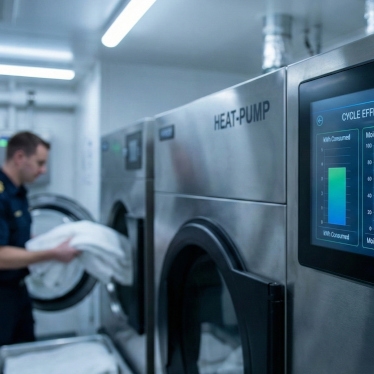
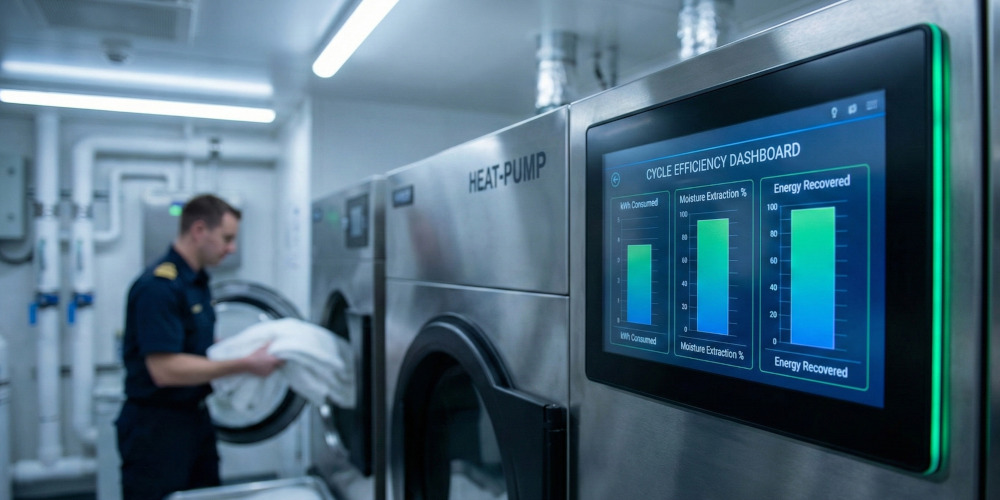
While washing consumes thermal energy for water, drying operations are the largest overall consumers of electricity due to the high latent heat of vaporization required to remove moisture from heavy fabrics. Traditional vented dryers expel heated exhaust air directly out of the ship, wasting immense amounts of energy. To counteract this, modern ship laundry efficiency relies on advanced heat pump technology. Heat pump dryers operate on a closed-loop system, condensing the moisture from the exhaust air and recovering the latent heat to warm the incoming air. This thermodynamic recycling can reduce the electrical consumption of a drying cycle by up to 60% compared to conventional resistive-heating models, significantly easing the burden on the ship's generators.
Load Capacity Optimization and Cycle Efficiency
The relationship between load capacity and energy consumption is non-linear; underloading a machine wastes the fixed energy costs of a cycle, while overloading prevents proper mechanical action, forcing costly re-washes. Advanced marine laundry equipment employs dynamic weighing systems integrated into the suspension struts to automatically adjust water intake, chemical dosing, and cycle duration to match the precise mass of the linens. Additionally, cycle efficiency is heavily dependent on the mechanical extraction phase. Extractors equipped with Variable Frequency Drives (VFDs) can ramp up drum speeds to generate over 400 G-force, mechanically extracting water to reduce residual moisture levels below 50%. Every 1% reduction in residual moisture translates to a corresponding reduction in the energy required for the subsequent drying phase.
Energy Recovery Systems and Sustainability
The implementation of integrated energy recovery systems is the definitive hallmark of sustainable marine laundry operations. Heat exchangers are installed on the drain valves of washer-extractors to capture the thermal energy from hot wastewater before it is discharged. This recovered heat is then transferred to the incoming cold freshwater supply, raising its baseline temperature and slashing the energy required by the internal heaters. Similar air-to-air cross-flow heat exchangers are utilized in dryer exhaust ducts.
Ultimately, mastering marine laundry energy consumption is an exercise in thermodynamic efficiency and operational discipline. By upgrading to high-extraction machinery, integrating heat recovery loops, and utilizing data-driven cycle management, ship operators can drastically lower their operational expenditures (OPEX) and align their laundry operations with the maritime industry's aggressive decarbonization targets.