Fire on the open sea is the biggest nightmare a sailor can face. LPG (Propane/Butane) used in yacht galleys provides cooking comfort but poses a serious risk if not managed correctly. LPG is heavier than air. In the event of a leak, it does not mix with the air and fly away; it sinks to the lowest point of the boat, the bilge, and accumulates there. Even the slightest spark can lead to a major disaster. Therefore, gas plumbing in yacht galleys is subject to much stricter standards and safety protocols than land-based systems.
Basic Components and Installation of Gas Plumbing
A safe system is a whole entity from where the cylinder is stored to where the stove is lit. Every component must be resistant to marine conditions (corrosion and vibration).
Gas Locker Standards
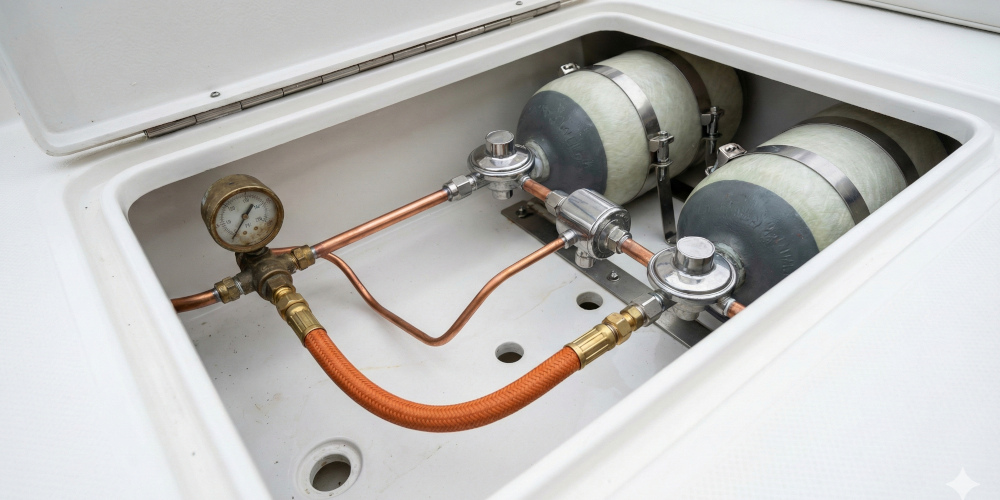
Gas cylinders are never stored inside the boat, in the engine room, or in closed cupboards. Only special "gas lockers" designed for this purpose, accessed from the outside, are used.
-
Ventilation: There must be a drain hole at the bottom of the locker, remaining above the boat's waterline. In a possible leak, the heavy gas must flow out of this hole into the sea, not into the boat.
-
Sealing: The locker lid must be gasketed and prevent gas from leaking into the boat 100%.
Pipeline and Flexible Hoses
The main line is usually drawn from seamless copper pipe. Copper pipes must be clamped every 30-50 cm to prevent breakage from vibration. Flexible hoses ("marine type" orange hoses) connecting the cylinder to the copper pipe are critical. The production year and standard number are written on these hoses. They generally must be renewed every 5 years, even if they appear undamaged.
Leak Detection and Alarm Systems
Relying on the human nose to detect gas leaks is risky. Technology offers precise solutions in this regard.
Solenoid Valve System
This is the most important safety equipment. It is an electric valve mounted immediately at the cylinder outlet. Gas flow is opened or closed by pressing a button in the galley. It stops gas from leaving the cylinder at the source when the system is not in use. In modern systems, the solenoid valve automatically closes when the gas detector senses a leak.
Gas Detectors
Since LPG is heavier than air, detector sensors must be mounted near the floor (at skirting board level or under the oven), not on the ceiling. Sensors give an audible and visual alarm before gas density reaches a dangerous level.
Safety Equipment in Gas Appliances
Stoves and ovens used on yachts differ from domestic appliances.
-
Flame Failure Device (Thermocouple): If the stove goes out due to wind or overflowing food, the system must automatically cut the gas. This feature is mandatory in marine devices.
-
Fiddle Rails: Holders that prevent pots from sliding in rough seas prevent burns caused by spilling hot food and damage to the gas line.
Periodic Checklist
The boat owner or technical staff must perform the following checks at regular intervals:
Table 1: Yacht Gas Plumbing Check Frequency and Methods
|
Check Point |
Frequency |
Method |
|
Flame Color |
Every Use |
Should be blue. Yellow/orange flame indicates poor combustion (Carbon monoxide risk). |
|
Flexible Hoses |
Monthly |
Check for cracks, hardening, or wear (Visual inspection). |
|
Connections |
Start of Season |
Test with soapy water or leak spray. Never check with a lighter. |
|
Drain Hole |
Monthly |
Check if the gas locker drain is clogged (Spider webs, etc.). |
|
Solenoid Valve |
Every Use |
Hearing the opening/closing sound (click) and confirming it cuts the gas. |
Legal Standards and ISO 10239
International standards (ISO 10239: Small craft - LPG systems) determine how gas plumbing is installed. Insurance companies inspect whether these standards are met in the event of a claim. Unapproved modifications or the use of domestic materials invalidate the insurance policy.
Safety in a yacht galley comes before taste. A correctly projected system installed with marine-certified materials (copper pipe, solenoid valve, marine stove) minimizes risks. Not neglecting periodic maintenance protects both your boat and your loved ones.