The engineering of marine galley ventilation systems requires precise management of thermal dynamics, airborne particulates, and humidity to maintain a safe, compliant, and operational environment within the enclosed hull of a vessel. Unlike land-based commercial kitchens, maritime ventilation networks must function under constant dynamic motion while seamlessly integrating with the ship’s primary HVAC architecture. Establishing an effective extraction system prevents the accumulation of ambient heat and corrosive moisture, which can rapidly degrade electronic components and compromise the structural integrity of interior bulkheads. Ship galley airflow standards dictate the exact parameters required to achieve a negative pressure zone in the galley, ensuring that cooking odors and hazardous fumes do not migrate into passenger corridors or dining spaces.
Engineers must calculate the total thermal load generated by heavy-duty cooking appliances to specify the correct exhaust and supply air volumes. Marine kitchen ventilation systems are designed using heavy-gauge AISI 304 or 316L stainless steel to resist salt-air corrosion and withstand aggressive chemical cleaning. Continuous operation without failure is the baseline requirement. Precision engineering ensures that the ventilation infrastructure supports both crew safety and the overall energy efficiency of the vessel.
Airflow Calculations and Hood Capacity
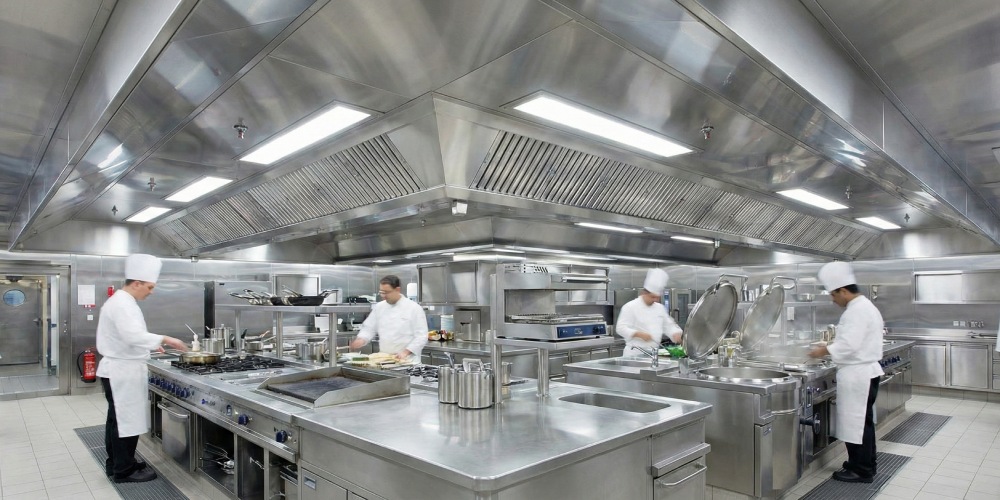
Determining the appropriate hood capacity relies on strict mathematical models that evaluate the surface area of the cooking equipment and the specific heat output of each appliance. Ship galley airflow standards require the extraction rate to exceed the generation rate of steam, smoke, and thermal plumes. Engineers utilize capture velocity calculations to ensure that all airborne contaminants are drawn into the canopy before they can disperse into the galley environment. This involves balancing the exhaust volume (measured in cubic meters per hour, CMH) with a dedicated makeup air supply.
If the makeup air is insufficient, the extraction fans will create excessive negative pressure, making doors difficult to open and starving the extraction system of necessary airflow. Conversely, too much supply air can cause turbulence, blowing heat and smoke back toward the chef. High-velocity extraction hoods with variable frequency drives (VFDs) are utilized to adjust fan speeds dynamically based on the current cooking load. This optimization significantly reduces the electrical consumption of the ventilation motors during off-peak hours.
Advanced Grease Filtration Technology
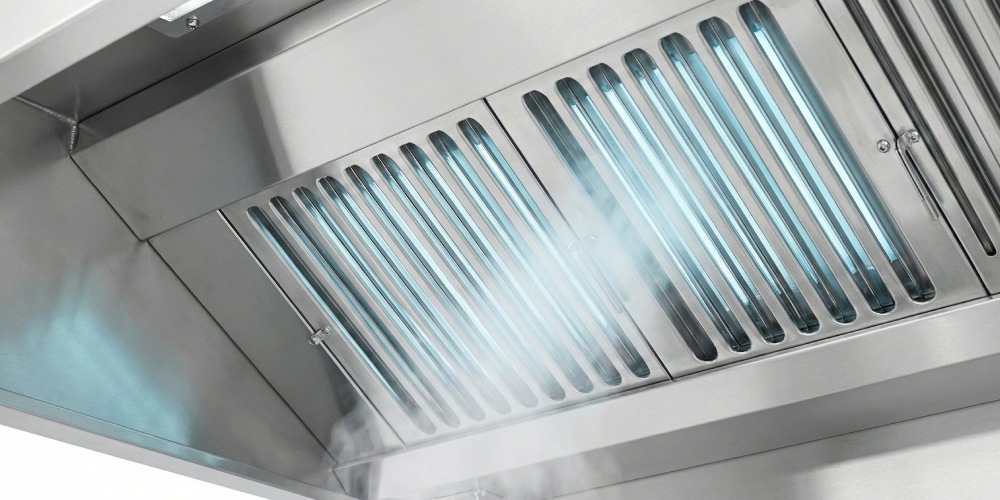
The core of marine kitchen ventilation lies in its ability to effectively separate highly flammable grease particles from the exhaust airstream before they enter the ductwork. Primary filtration is achieved using high-efficiency stainless steel baffle filters, which force the air to change direction rapidly, causing heavy grease droplets to condense and drain into collection troughs. However, baffle filters alone are insufficient for long maritime voyages where duct cleaning access is severely restricted.
Modern marine galley ventilation systems incorporate secondary treatment stages, such as UV-C light arrays or ozone generators located directly behind the primary filters. These technologies break down microscopic lipid molecules and organic compounds through photolysis and oxidation, effectively converting hazardous grease into harmless ash and gas. This advanced filtration prevents the buildup of highly combustible grease layers within the extraction ducts, eliminating one of the most significant fire hazards on a vessel and dramatically reducing the required frequency of manual duct maintenance.
Fire Safety and IMO Integration
Strict compliance with International Maritime Organization (IMO) regulations and the Safety of Life at Sea (SOLAS) convention is non-negotiable when designing marine ventilation. Fire safety integration is paramount. Exhaust ducts must be constructed from thick-walled steel and insulated with approved fire-resistant materials to contain thermal events. Automated fire dampers are installed at penetration points through fire-rated bulkheads to prevent flames and smoke from spreading to adjacent compartments.
Marine galley ventilation systems are directly linked to the vessel's centralized fire alarm and suppression network. In the event of a thermal emergency, the system is programmed to automatically shut down extraction and supply fans to starve the fire of oxygen. Simultaneously, local fire suppression systems (such as wet chemical agents or high-pressure water mist) integrated into the hood canopy are activated to extinguish the flames at the source. The design must ensure that manual override switches are easily accessible for the crew.
Impact on Operational Efficiency and Hygiene
The operational efficiency of a vessel is directly impacted by the performance of its galley ventilation. By effectively capturing and exhausting excess heat, the ventilation system reduces the cooling load required from the ship’s central air conditioning plant. This translates to measurable fuel savings over the course of a voyage. Furthermore, effective odor control ensures a premium experience for guests on luxury yachts and cruise ships, preventing galley smells from permeating the living quarters.
Hygiene is critically dependent on moisture control. Steam generated by dishwashers and boiling pans creates a high-humidity environment that promotes the rapid growth of mold, mildew, and bacteria on galley surfaces. High-performance extraction hoods remove this moisture instantly, maintaining a dry and sterile atmosphere. Consequently, adherence to ship galley airflow standards not only protects the vessel from fire risks but also guarantees the sanitary conditions necessary for safe food preparation at sea.