In the high-stakes environment of maritime operations, the laundry department is often an overlooked giant in terms of resource consumption. On a large cruise ship or an offshore platform, thousands of liters of fresh water and significant kilowatts of energy are consumed daily to maintain the rigorous hygiene standards required for guests and crew. As the industry faces increasing pressure from environmental regulations and rising fuel costs, optimizing marine laundry equipment for efficiency has moved from a "nice-to-have" to a strategic necessity. Achieving sustainability at sea requires a holistic approach that integrates advanced hardware, durable materials, and intelligent logistics.
The Resource Challenge: Why Efficiency is Critical at Sea
Unlike land-based facilities, every drop of water used in a ship’s laundry must be produced via energy-intensive desalination or carried in limited bunker tanks. Similarly, energy is a finite resource generated by the vessel’s engines or generators.
-
Operational Expense (OPEX): Inefficient laundry cycles directly correlate to higher fuel consumption for water production and heating.
-
Environmental Compliance: Strict maritime regulations, including the Carbon Intensity Indicator (CII), mean that every megajoule of energy saved helps keep the vessel within its allowed emission limits.
-
System Longevity: High-efficiency systems often run cooler and with more precise motor control, reducing the mechanical wear and tear on components, which is vital when spare parts are thousands of miles away.
Engineering for Low Consumption: High-Performance Hardware
The selection of the machines themselves is the first line of defense against waste. Modern marine-grade washers and dryers are engineered specifically to thrive in a resource-constrained environment.
-
Precision Water Dosing: Advanced washer-extractors use internal sensors to weigh the load and adjust water levels to the exact amount required. This prevents the common waste associated with "half-load" cycles.
-
Heat Pump Drying Technology: Traditional dryers vent heat directly into the atmosphere. Heat pump dryers, however, recycle the warm air, significantly reducing the energy required for the drying process and keeping the laundry room temperature lower.
-
High G-Force Extraction: By utilizing high-speed extraction cycles, washers remove more moisture during the spin phase. Every milliliter of water removed by the washer is water that the dryer doesn't have to evaporate using expensive electrical heat.
Material Integrity: The Role of 316L Stainless Steel
Longevity is a pillar of sustainability. In the humid, saline, and chemical-heavy environment of a ship's laundry, material failure is a frequent cause of system-wide inefficiency.
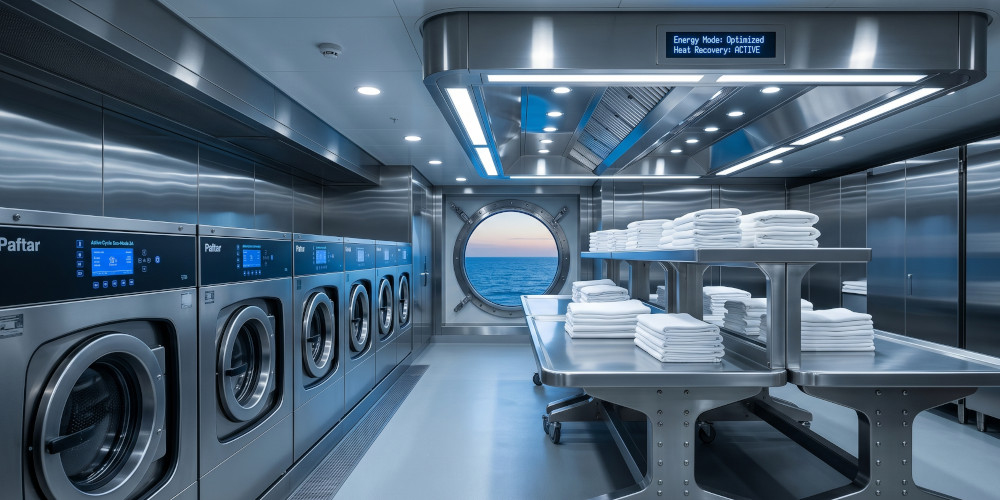
The use of laundry stainless steel furnitures made from AISI 316L grade steel is essential for several reasons:
-
Chemical Resistance: Industrial detergents and fabric softeners can be highly corrosive. 316L steel withstands these chemicals without pitting, ensuring that surfaces remain smooth and hygienic for decades.
-
Zero Contamination: Rusted furniture can leave permanent stains on linens. By using high-grade stainless steel for sorting tables and trolleys, vessels avoid the "hidden" energy cost of re-washing stained items.
-
Thermal Stability: Stainless steel surfaces in folding and ironing zones do not absorb moisture or harbor bacteria, maintaining the thermal efficiency of the entire room.
Logistics as a Saving Strategy: Space Planning and Workflow
Resource efficiency is not just about the machines; it is about how the textiles move through the space. Intelligent space planning for marine laundries can lead to measurable energy savings.
-
Reducing Idle Time: A "linear flow" layout—where dirty items enter one side and clean items emerge at the other—ensures that machines are loaded and unloaded immediately. This prevents energy-intensive equipment from sitting in "standby" mode.
-
Optimizing Ventilation: By grouping heat-producing equipment (dryers and ironers) near exhaust points and placing sorting tables in cooler zones, the ship's HVAC system doesn't have to work as hard to maintain a habitable temperature.
-
Ergonomic Sorting: When crew members can sort linens quickly on large, specialized stainless steel tables, the machines can be operated at their most efficient, full-capacity levels more consistently.
Practical Tips for Shipboard Efficiency
-
Full Load Policy: Encourage the crew to only operate machines when at full capacity to maximize the water-to-linen ratio.
-
Regular Filter Cleaning: Clogged lint filters in dryers can increase energy consumption by up to 20% by forcing the motor to work harder against back-pressure.
-
Steam Recovery: If the vessel uses steam for heating, ensure all valves are insulated. Leaking steam is one of the most invisible yet costly forms of energy waste in a maritime laundry.
Building a Resilient, Efficient Hub
Water and energy efficiency in marine laundry systems is the result of a synergy between high-end metallurgy, smart space design, and advanced technology. By investing in 316L stainless steel infrastructure and high-efficiency machines, maritime operators do more than just save on fuel and water costs; they build a resilient service hub that supports the vessel’s long-term operational health. In the modern era of "Green Shipping," an efficient laundry is a clear indicator of a well-managed, future-proof vessel.