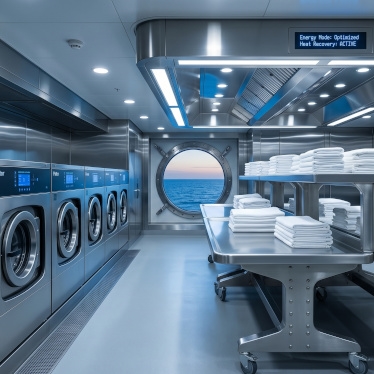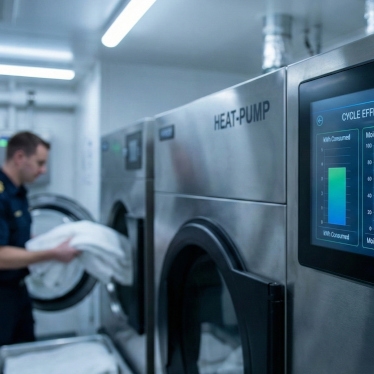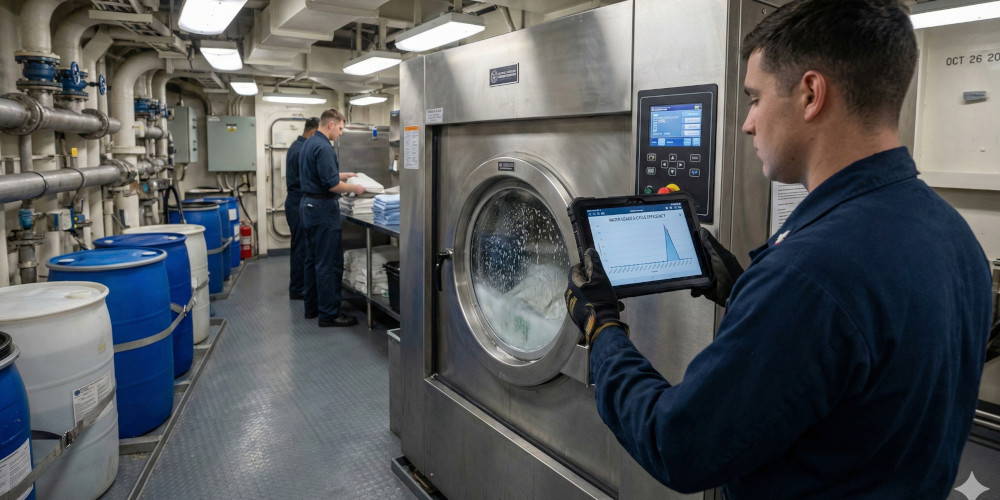
The strategic integration of digital monitoring technologies within marine laundry operations necessitates a complex architecture of Industrial Internet of Things (IIoT) sensors and edge computing gateways that facilitate the real-time acquisition of performance metrics from heavy-duty industrial washing units and drying systems operating in the isolated and vibration-prone environments of a vessel’s hull. This technical framework allows operational managers to supervise the energy consumption and water throughput of the entire laundry suite without needing physical presence in the machinery space, ensuring that the high-frequency cleaning cycles required for crew and guest textiles are maintained at peak efficiency. Marine laundry equipment must function under variable electrical loads and constant motion. Operational monitoring systems provide the necessary data transparency to prevent unexpected downtime. Professional marine laundry equipment solutions serve as the foundation for these automated technical environments.
Digital tracking involves the use of specialized software interfaces. Engineers monitor the chemical dosage levels in real time. This prevents the degradation of delicate marine textiles. Ship laundry systems utilize encrypted data links to send alerts to the bridge. This connectivity improves the responsiveness of the technical crew. AISI 316L stainless steel housing protects the sensors from salt-water corrosion. Sustainability is a primary driver for adopting these monitoring tools.
Operational Challenges in Marine Laundry Systems
Managing the inherent operational challenges in marine laundry systems requires a rigorous assessment of the mechanical stresses and environmental stressors such as high humidity and salt-laden air which can accelerate the failure of electromechanical components if the system lacks a proactive digital surveillance layer to detect early-stage thermal anomalies or unusual vibration patterns. Traditional manual logging methods are insufficient for modern maritime standards. The risk of fire in drying units is a serious concern. Overheating sensors must be calibrated for 24-hour operation. Space is limited in ship laundry systems. Maintenance access is often restricted.
Marine environments cause rapid wear on moving parts. Humidity affects the lifespan of electronic control boards. Digital laundry monitoring identifies these issues before they cause a total system shutdown. Sensors detect leaks in the water intake valves instantly. This prevents the flooding of technical compartments. Shipyards prioritize equipment that includes integrated diagnostic ports. This simplifies the troubleshooting process for the engineering team.
Sensor-Based Monitoring Solutions
The implementation of sensor-based monitoring solutions relies on the deployment of precision transducers that measure water pressure, temperature gradients, and chemical concentration levels to ensure that every wash cycle complies with the rigorous hygiene protocols established for international maritime health standards. These sensors are integrated into the marine laundry equipment chassis. They send signals to a centralized control unit. This unit analyzes the data for deviations from the preset parameters. Smart dosing pumps communicate with the main controller to optimize detergent use.
Vibration sensors monitor the balance of the drum during high-speed extraction. If the load is unbalanced, the system adjusts the speed automatically. This prevents damage to the bearings. Ultrasonic sensors measure water levels with high accuracy. They are less prone to failure than mechanical floats. Temperature probes ensure that drying cycles do not exceed safety limits. This technology reduces the risk of lint combustion. Digital laundry monitoring provides a safe and stable environment for ship operations.
Data Tracking and Maintenance Planning
Developing a seamless system for data tracking and maintenance planning necessitates the use of cloud-based platforms that aggregate historical performance data to generate predictive maintenance schedules, effectively eliminating the reliance on reactive repair models that often result in prolonged periods of operational inactivity during critical voyages. Data centers on the ship store the logs locally. They sync with shore-based offices when satellite connectivity is available. This allows fleet managers to compare the performance of multiple vessels.
Predictive models analyze the usage hours of every motor. They suggest part replacements before the end-of-life cycle. This proactive approach lowers the total cost of ownership. Technical teams receive push notifications on their mobile devices. These alerts include the exact part number needed for the repair. Digital monitoring creates a transparent history of every machine. This record is vital for insurance and compliance audits. Operational monitoring ensures that the laundry department stays ahead of the maintenance curve.
Table 1: Manual vs. Digital Marine Laundry Monitoring
|
Feature |
Manual Operation |
Digital Monitoring Technology |
|
Data Accuracy |
Subjective / Human error |
Objective / Sensor-driven |
|
Leak Detection |
Visual inspection only |
Instant automated alerts |
|
Maintenance |
Reactive (Fix after break) |
Predictive (Fix before fail) |
|
Energy Control |
Estimated usage |
Real-time kWh tracking |
|
Chemical Dosing |
Manual measurement |
Precise automated dispensing |
|
Fire Safety |
Smoke detectors only |
Real-time thermal surveillance |
|
Remote Access |
None |
Full bridge / Shore integration |
Operational Benefits of Digital Monitoring
The adoption of digital monitoring technologies produces a direct improvement in operational efficiency by reducing the freshwater consumption of the vessel through precise cycle control and optimizing the power distribution network to prevent peak-load surges during high-intensity laundry operations. Water recycling systems benefit from digital oversight. They monitor the filtration quality in real time. This ensures that recycled water meets the required purity standards.
Operating costs decrease significantly over time. Automated dosing reduces chemical waste by up to 20%. Energy-efficient drying cycles lower the fuel consumption of the generators. Crew morale improves when the equipment is reliable. Digital tracking simplifies the administrative workload of the laundry staff. Professional marine laundry equipment becomes a smart asset for the shipowner. Engineering and technology combine to provide a sustainable future for maritime operations.