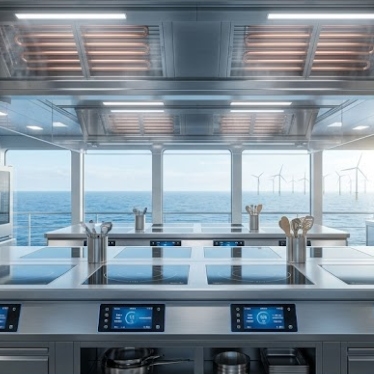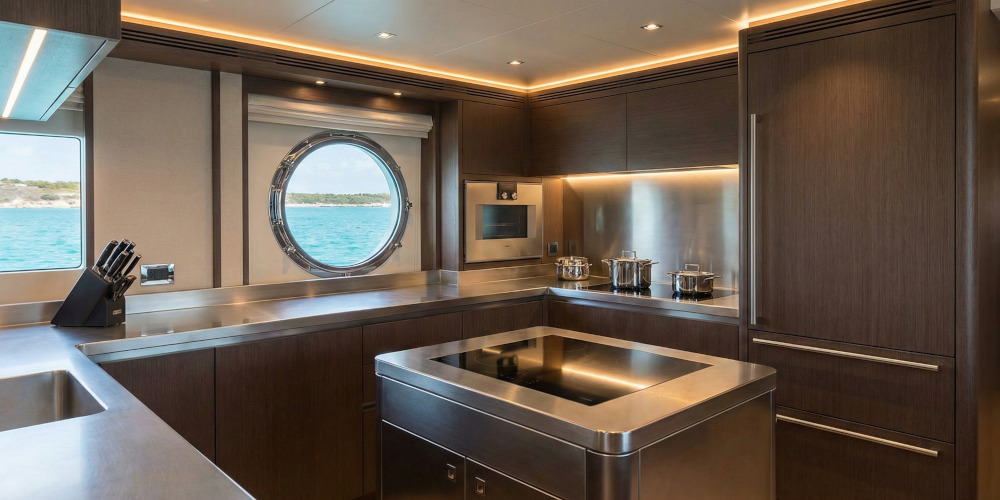
The fundamental divergence in yacht vs cruise galley systems is primarily dictated by the extreme variance in service volume and consumer expectations which necessitates distinct engineering approaches toward material selection, spatial allocation, and thermal management protocols within the vessel's hull. While a private yacht galley focuses on high-precision culinary output for a limited number of guests, cruise ship kitchens must operate as high-capacity industrial production centers capable of serving thousands of meals in synchronized cycles. This structural difference requires engineers to consider the kinetic energy of staff movement and the load-bearing capacity of deck plating when installing professional galley equipment. Shipyards prioritize different metrics depending on the vessel type. Yacht interior planning emphasizes aesthetics and silent operation. Cruise ship designs focus on logistical throughput and hygiene at scale.
Maritime professionals recognize that the choice of ship kitchens influences the entire vessel’s energy budget. Heavy-duty appliances consume significant power. Large vessels require complex electrical grids to support industrial ovens and fryers. Compact yachts use smart load-sharing systems to prevent generator overload. Material durability remains a constant requirement across both sectors. AISI 316L stainless steel provides the necessary resistance to salt air. Unoks provides tailored solutions for these diverse maritime needs.
Scale and Capacity Differences
Evaluating the transition from mass-market volume production in cruise ship kitchens to the specialized service models found in luxury yacht galleys reveals that the scale of operations dictates every aspect of the infrastructure from cold storage volumes to waste disposal throughput. A cruise ship may feed 5,000 passengers plus 2,000 crew members simultaneously. This requires vast walk-in freezers and centralized preparation areas. In contrast, a yacht galley usually serves 12 to 20 guests. The storage on a yacht is compact and highly organized. Efficiency in a yacht galley relies on the "one-step" reach principle.
Cruise ships utilize a "hub and spoke" model for food distribution. Central galleys handle heavy prep work. Satellite galleys finish the dishes for specific restaurants. This requires a complex network of dumbwaiters and service elevators. Yacht galleys are typically self-contained units. The chef handles prep, cooking, and plating in one area. The total volume of food handled in a cruise galley is measured in tons. Yacht galleys measure ingredients in grams and liters. This difference in scale affects the choice of professional galley equipment. Large tilting bratt pans dominate cruise kitchens. Compact combi-ovens are the standard for yacht galleys.
Workflow and Staffing Models
The operational efficiency of professional galley equipment within a maritime environment depends heavily on the staffing hierarchy and the division of labor which on a cruise ship resembles a traditional assembly line where each station is dedicated to a single culinary task to ensure consistency across thousands of plates. This compartmentalized approach requires specialized zones for butchery, bakery, and cold larder work. Each zone has its own drainage and ventilation. Staff members rarely move between zones during service. This prevents cross-contamination in high-volume environments.
On a yacht, the workflow is fluid and multi-functional. One or İki (Two) chefs manage the entire process. The layout must support multi-tasking. Ergonomics are vital because space is extremely tight. Ship kitchens on yachts often feature a central island. This allows the chef to move 360 degrees around the cooking zone. Cruise ship kitchens use long, linear corridors for rapid staff transit. Yacht chefs prioritize privacy and quiet. Cruise galley staff operate in a high-noise, high-activity industrial zone. Communication methods also differ. Yachts use silent call systems. Cruise galleys use digital monitors and loud verbal commands.
Equipment and Infrastructure Requirements
The technical specification of marine galley comparison data highlights that industrial cruise ship kitchens require massive HVAC systems and centralized fire suppression networks to mitigate the immense thermal output and grease accumulation resulting from 24-hour cooking operations. Cruise ships use large-scale grease traps. These systems are integrated into the ship's grey water processing. Yacht galleys use smaller, localized grease filters. These are easier to clean and maintain. Fire safety in yacht galleys often involves localized CO2 or water-mist systems.
Professional galley equipment for yachts must be silent. Fans and motors use inverter technology to reduce vibration. In a cruise galley, durability is more important than noise levels. Equipment must withstand constant use by multiple shifts. Mechanical switches are preferred over delicate touchscreens for cruise use. Yacht owners prefer sleek, digital interfaces that match the interior design. Power requirements for a cruise galley can reach several megawatts. A yacht galley usually stays within the range of 50 to 100 kilowatts.
Table 1: Yacht vs. Cruise Galley Comparison
|
Feature |
Yacht Galley Systems |
Cruise Ship Kitchens |
|
Operational Goal |
Culinary Precision / Luxury |
Mass Production / Efficiency |
|
Guest Capacity |
10 - 30 Guests |
2,000 - 7,000 Guests |
|
Material Choice |
AISI 316L (Polished) |
AISI 304 / 316 (Industrial) |
|
Staffing Model |
Multi-tasking (1-3 staff) |
Specialized (100+ staff) |
|
HVAC Load |
Low / Ultra-quiet |
Extreme / High-volume |
|
Waste System |
Compact Bins / Compactors |
Centralized Pulping / Incineration |
|
Layout Logic |
Compact Work Triangle |
Linear Assembly Lines |
Operational Impact on Design Decisions
Strategic design decisions in yacht vs cruise galley systems are fundamentally influenced by the logistical requirements of replenishment cycles where a cruise ship must facilitate the rapid loading of palletized goods during short port stays while a yacht relies on smaller, frequent deliveries that can be handled by the crew via side boarding doors. This dictates the size of the galley entrances. Cruise ships need wide ramps for forklifts. Yachts need hidden, ergonomic paths for hand-carrying crates.
Maintenance access is another design driver. Cruise ship equipment is often modular for quick replacement. If a fryer fails, the crew swaps it out instantly. Yacht equipment is often integrated into the custom cabinetry. Repairs are performed in place. This requires front-access service panels. Designers must also consider the "Motion of the Sea." Professional galley equipment on both vessel types needs secure mounting. On a yacht, this mounting is hidden for aesthetics. On a cruise ship, heavy-duty flanş feet are visible and bolted to the deck.
Waste management also shows a major difference. Cruise ships have dedicated rooms for sorting and pulping food waste. This waste is often processed for discharge or incineration. Yachts use high-power compactors to reduce volume. Odor control is critical on yachts. Carbon filters are used in waste bins.
The future of ship kitchens involves more automation. Cruise ships are testing robotic prep stations. Yachts are adopting smart IoT sensors for energy monitoring. Unoks continues to lead in providing both types of systems. Understanding these operational differences ensures successful project completion. Shipyards must choose the right equipment for the right mission.