As the maritime industry pivots toward "Green Shipping" and stringent decarbonization targets, the galley has emerged as a critical zone for operational improvement. A ship’s kitchen is one of the most energy-intensive areas on board, often accounting for a significant portion of the hotel load. Designing a sustainable system is no longer just about waste reduction; it is a holistic engineering challenge that combines high-performance marine galley equipment with materials that offer a low environmental footprint over a 30-year lifecycle. To achieve true sustainability, naval architects and owners must focus on three pillars: energy-efficient heat management, 100% recyclable materials, and optimized logistical flows.
Material Selection: The Circular Economy of 316L Stainless Steel
Sustainability begins with the "Life Cycle Assessment" (LCA) of the materials used. In the harsh maritime environment, choosing a cheap material that requires frequent replacement is the opposite of sustainable design.
The strategic marine kitchen equipment materials selection prioritizes AISI 316L stainless steel for several eco-friendly reasons:
-
Durability and Longevity: Its extreme resistance to saltwater corrosion means it does not need to be replaced for decades, reducing the demand for raw material extraction.
-
100% Recyclability: At the end of the vessel's life, stainless steel components can be fully recycled without loss of quality, fitting perfectly into the circular economy.
-
No Toxic Coatings: Unlike coated or painted metals, 316L does not release micro-plastics or toxic chemicals into the greywater system or the atmosphere.
Energy Efficiency: Induction and Smart Heating
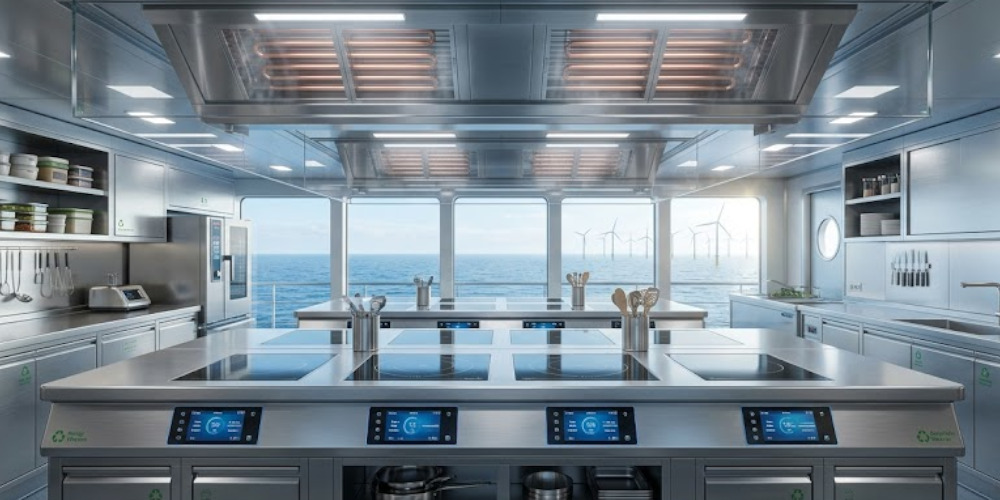
The transition from traditional electric heating to advanced technologies is the fastest way to reduce a vessel's carbon footprint. Modern galley stainless steel furniture is now designed to integrate high-efficiency induction hobs rather than radiant heat plates.
-
Induction vs. Electric: Induction technology transfers 90% of energy directly to the cookware, compared to only 50-60% for traditional electric rings. This drastically reduces the ambient heat in the galley.
-
Reduced HVAC Load: By minimizing "stray heat" from cooking surfaces, the ship's air conditioning (HVAC) system doesn't have to work as hard to cool the kitchen. This secondary energy saving is often larger than the direct energy saving from the cooking equipment itself.
-
Heat Recovery Systems: Sustainable designs incorporate heat exchangers in the ventilation hoods to capture waste heat from ovens and use it to pre-heat domestic hot water for the ship.
Intelligent Layout and Operational Sustainability
A sustainable galley is an efficient one. The physical layout must minimize the time ovens are open and the distance heavy, heated items are moved.
-
Zone-Based Control: Segmenting the galley into thermal zones allows the crew to shut down entire sections during off-peak hours, rather than keeping the whole line on standby.
-
Digital Monitoring: Integrating smart sensors into the equipment allows for real-time tracking of energy peaks. This data helps the Chief Engineer manage the ship's power grid more effectively, preventing unnecessary generator starts.
-
Water Conservation: Installing low-flow pre-rinse valves and sensor-activated faucets in the stainless steel prep stations can reduce water consumption by up to 30%, subsequently reducing the energy needed for desalination and water heating.
Conclusion: The Future of Eco-Friendly Galleys
Designing for sustainability in the maritime sector is a balance between rugged reliability and technological innovation. By combining the infinite recyclability of marine-grade stainless steel with smart, energy-efficient equipment, cruise and commercial operators can significantly lower their environmental impact. A sustainable kitchen system is not just an "eco-friendly" choice—it is a high-performance asset that reduces OPEX and ensures compliance with the evolving environmental regulations of the future.