In the world of luxury superyacht construction, the design of wet areas—including guest en-suites, beach clubs, and crew sanitary spaces—presents a unique engineering paradox. These spaces must deliver the flawless, high-end aesthetic expected of a five-star hotel while surviving the punishing realities of a marine environment. Designing a marine wet room requires far more than selecting premium marble and high-end faucets; it demands an understanding of structural deflection, constant vessel motion, weight limitations, and the corrosive nature of salt-laden air.
Achieving a successful balance between luxury and technical performance relies on selecting certified yacht sanitary equipment and integrating smart structural engineering behind the beautiful finishes.
Material Selection: The Reign of Marine-Grade Stainless Steel
When planning a luxury interior, standard residential fixtures are a liability. The combination of high humidity, enclosed spaces, and sea air will cause inferior metals to pit, tarnish, and fail within months.
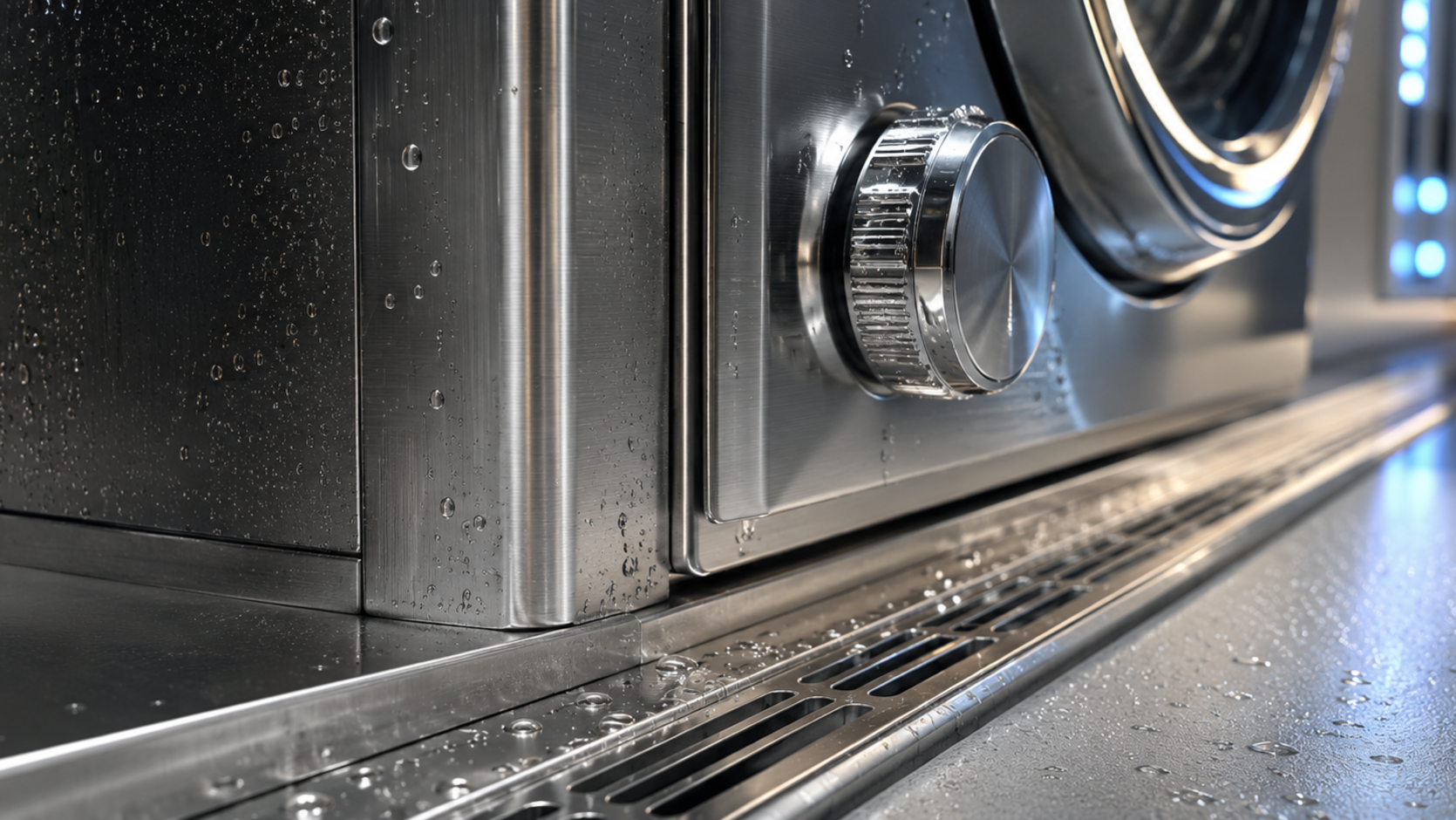
AISI 316L Stainless Steel Hardware: For structural framing, custom drainage channels, grab rails, and flush ceiling panels, marine-grade AISI 316L stainless steel is the gold standard. The addition of Molybdenum provides crucial resistance against localized pitting and crevice corrosion caused by airborne chlorides.
Weight Management Strategy: Upper-deck luxury additions heavily impact a vessel's stability. Every kilogram added to a yacht's superstructure affects its center of gravity, fuel efficiency, and speed. Utilizing precision-engineered superyacht interior stainless steel structures allows designers to create thin, incredibly strong partitions and fixtures that offer a fraction of the weight of stone or traditional masonry.
Finishing Excellence: To ensure the industrial strength of 316L matches a luxury palette, the metal can be treated with advanced PVD (Physical Vapor Deposition) coatings or satin-mirror polishing, transforming structural components into high-end design accents.
Technical Challenges: Waterproofing, Movement, and Drainage
A beautiful yacht bathroom design is only as good as the invisible engineering supporting it. Superyachts are dynamic structures that twist, flex, and vibrate while navigating rough seas.
Advanced Flexible Waterproofing
Traditional rigid waterproofing membranes used on land will crack when exposed to the torsional twisting of a yacht's hull. Designers must utilize liquid-applied, highly elastomeric polyurethane membranes that flex with the vessel's movements. This flexibility guarantees that the watertight seal remains unbroken over decades of continuous operation.
Smart Marine Drainage Systems
Standard gravity drains are entirely inadequate on a vessel that is rolling and pitching. If a drain is improperly engineered, water will spill back out onto the bathroom floor during a heavy swell.
Scupper and Channel Optimization: Linear slot drains made of AISI 316L stainless steel should span the entire low side of the wet room floor.
Deep-Sump Scuppers: Drainage sumps must be deeper than standard units and fitted with internal baffling or anti-backflow valves to ensure that greywater flows strictly in one direction—toward the graywater holding tanks—regardless of the ship’s list or motion.
Design Synchronization: Guest Areas vs. Crew Spaces
A comprehensive approach to yacht architecture requires tailoring wet areas to their specific users. While guest zones prioritize invisible luxury with PVD-coated 316L stainless steel and lightweight stone composites, crew spaces focus on ultra-efficient utility and satin-finish surfaces designed for maximum accessibility and chemical resistance.
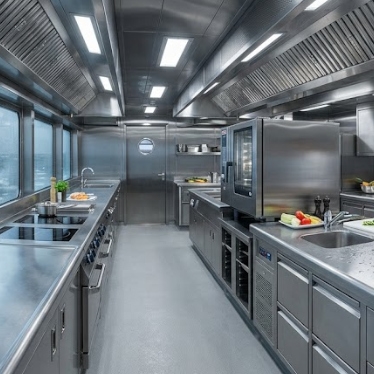
When coordinating these spaces, engineers must synchronize the technical layout with the yacht's overall operations. Applying the same strict spatial efficiency used in yacht galley equipment integration allows designers to optimize plumbing routing, incorporate hidden acoustic dampening, and guarantee quick-access servicing panels without disrupting the seamless, high-end wall finishes of adjacent guest cabins.
Navigating the Boundaries of Marine Luxury
The key to masterful superyacht wet area design lies in treating engineering constraints as design opportunities. By prioritizing marine-grade AISI 316L stainless steel, flexible membrane technologies, and dynamic drainage systems, yacht designers can confidently push the boundaries of luxury. A technically sound wet room protects the vessel's structural integrity from hidden water damage while offering owners and guests a private sanctuary that performs flawlessly in any sea state.