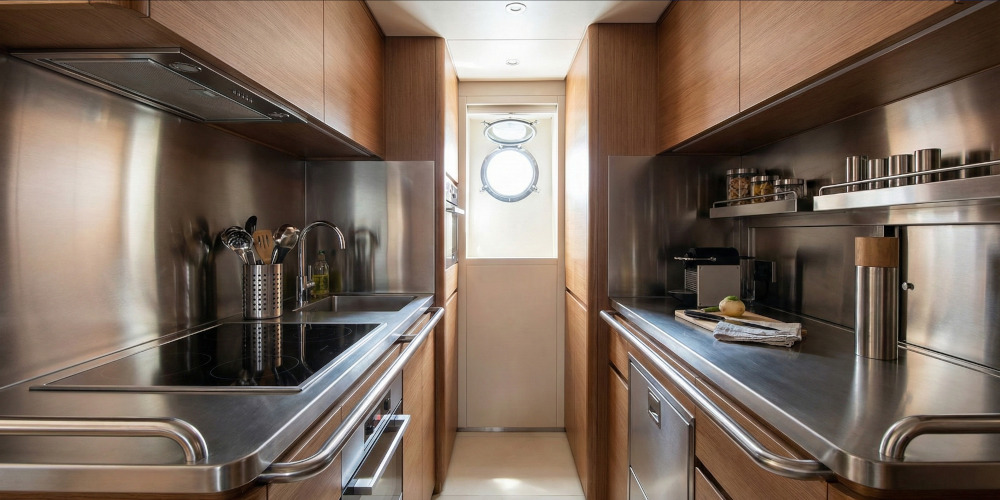
The structural engineering of compact marine galley systems necessitates a rigorous adherence to volumetric efficiency protocols where every cubic centimeter of the vessel’s internal envelope must be calculated relative to the displacement and center of gravity of the ship, ensuring that the integration of high-output culinary hardware does not interfere with the delicate balance of the hull’s hydrodynamic performance. This technical symbiosis between industrial utility and marine architecture drives the requirement for multi-functional appliances that offer high-density performance without exceeding the physical boundaries of the bulkhead. Marine kitchen equipment must survive constant motion and high humidity. Yacht interior planning focuses on rigid durability and surface integrity. Compact systems provide the necessary performance in small voids. Professional galleys utilize every available millimeter of space.
Designers prioritize the reduction of the system footprint. Weight distribution is a critical factor for yacht stability. Engineers choose materials that offer high strength-to-weight ratios. AISI 316L stainless steel remains the primary choice for these environments. It resists corrosion from salt air and harsh chemicals. Modular components allow for faster installation in shipyards. Efficiency defines the success of a modern marine kitchen.
Spatial Constraints in Marine Galley Design
Managing the inherent spatial constraints within marine galley design requires an intimate understanding of the intersection between ergonomic movement patterns and the rigid bulkheads of the vessel’s superstructure, where the designer must prioritize the safety of the crew against the high kinetic energy of moving cookware during extreme sea states and unpredictable pitching motions. Standard kitchen layouts do not work in the marine environment. Shipyards use custom frames to secure every unit to the deck. Space optimization marine galley projects reduce wasted movement. Effective yacht galley layout plans prevent crew injury during heavy weather. Stability is the most important design consideration.
Space is a finite resource on any vessel. Bulkheads limit the width of the workspace. Deck heights restrict the installation of large ventilation hoods. Marine kitchen equipment must fit into these specific dimensions. Manufacturers design slim-profile units for this purpose. These units maintain high thermal output despite their size. Compact marine galley systems use vertical space to compensate for narrow floors. Proper yacht interior planning eliminates "dead zones" in corners. Every cabinet serves a specific technical purpose.
Equipment Footprint and Modular Configuration
The selection of a specific equipment footprint relies on the modular configuration of individual cooking stations that allow for the seamless nesting of induction surfaces and combi-ovens within a single stainless steel chassis, effectively reducing the cumulative floor area required for professional food preparation while maintaining the high thermal output necessary for a high-volume service schedule. Modular design allows for rapid replacement of parts. Technicians access internal components through front-facing panels. This eliminates the need to move heavy machines for maintenance. Yacht galley layout efficiency increases with integrated units. Compact marine galley systems utilize shared power supplies to save room.
Induction technology is a core component of compact systems. It eliminates the need for large gas tanks and heavy piping. Induction hobs generate less stray heat. This reduces the load on the vessel’s air conditioning. Smaller ventilation systems become viable. Marine kitchen equipment must operate on variable power loads. Modular units share energy across different functions. A single combi-oven replaces multiple traditional appliances. This reduces the total weight of the galley by 30%.
Table 1: Traditional Galley vs. Space-Optimized Compact System
|
Parameter |
Traditional Galley Layout |
Space-Optimized Compact System |
|
Appliance Count |
5-7 individual units |
2-3 modular combo units |
|
Floor Area Utilization |
60% active, 40% dead space |
95% active efficiency |
|
Ventilation Volume |
High external requirements |
Integrated localized systems |
|
Total System Weight |
450 kg - 600 kg |
280 kg - 350 kg |
|
Maintenance Access |
Rear and side access needed |
Front-loading modular access |
|
Energy Efficiency |
Low (High heat loss) |
High (Induction / Insulation) |
Workflow-Based Layout Planning
The implementation of workflow-based layout planning involves the mathematical mapping of a chef’s physical reach and movement frequency between cold storage and thermal processing zones to minimize the transit time across the galley floor, ensuring that the operational throughput remains high even when the vessel is operating with a reduced crew count during long-distance offshore transits. The "Work Triangle" is the foundation of this logic. It connects the sink, the stove, and the refrigerator. In a yacht galley layout, this triangle is often compressed. Designers reduce the distance between these points to 1.2 meters. This saves time during meal service.
Ergonomics play a vital role in safety. Anti-slip flooring is a standard requirement. Handrails must be integrated into the leading edges of counters. Marine kitchen equipment includes fiddle rails to stop pots from sliding. Drawers use positive-locking latches. These latches prevent accidental opening during a roll. Workflow efficiency prevents bottlenecks in narrow corridors. Crew members can pass each other without interference. Compact marine galley systems prioritize the "one-step" rule. A chef should reach most tools without taking a step.
Storage Integration in Limited Volumes
Maximizing storage integration within limited volumes demands the use of high-density pull-out shelving and overhead rack systems that utilize the verticality of the galley bulkheads while incorporating vibration-damping mechanisms to prevent the mechanical noise of shifting inventory from resonating through the structural members of the yacht’s hull during engine operation. Vertical storage is the best solution for narrow beams. Pull-out larders provide access to deep corners. Magnetic strips secure knives and small tools. This keeps the counters clear for preparation.
Inventory management is easier with clear visibility. Drawers use soft-close technology to reduce noise. Yacht interior planning includes hidden compartments in the floor or ceiling. These areas store backup supplies for long voyages. Marine kitchen equipment often includes integrated refrigeration drawers. These drawers replace tall, upright units. They fit under the counter to save space. Cold storage must be well-insulated to prevent energy waste. Proper sealing keeps the internal temperature stable.
Operational Impact of Space Optimization
The operational impact of space optimization within compact marine galley systems extends beyond simple convenience to directly influence the vessel’s energy budget and maintenance schedule, as smaller, high-efficiency appliances consume less freshwater and electricity while reducing the total heat load that the HVAC system must neutralize during peak summer operations in Mediterranean or Caribbean marinas. Efficient galleys lower the cost of ownership. They require less power from the generators. This extends the life of the vessel’s machinery. Space optimization marine galley projects increase the resale value of the yacht.
Maintenance becomes a simpler task with modular gear. Technicians do not need to dismantle bulkheads for repairs. Standardized parts reduce the inventory of spares needed on board. Faster cleaning times improve crew morale. Stainless steel surfaces meet the highest hygiene standards. They resist bacteria and mold in damp environments. Compact marine galley systems provide a professional environment in a small package. Shipyards prefer these systems for their ease of integration. Yacht owners benefit from increased living space in other areas of the vessel.
The future of marine kitchen equipment lies in further miniaturization. Smart sensors will monitor energy use in real time. AI-driven layouts will predict the best workflow for different menu types. These advancements will continue to refine yacht interior planning. Efficiency remains the ultimate goal for every designer. Compact systems provide the power of a commercial kitchen on the open sea. Engineering excellence ensures that space is never a barrier to quality.