In the maritime industry, operational sustainability and personnel health develop in direct proportion to the biological and chemical resistance capacities of the materials used in the vessel's interiors. The high humidity, temperature fluctuations, and salt concentration in the open sea environment create an extremely favorable ground for the proliferation of microorganisms and threaten the technical integrity of equipment. Marine engineers and yacht owners select alloys with the highest surface smoothness and a natural shield against corrosion to fight these harsh conditions. UNOKS utilizes stainless steel technology as the fundamental building block to provide hygiene safety in a wide range of areas from food preparation zones to waste management systems. Choosing the right material is a strategic decision that protects the quality of life at sea. Engineering teams work with molecularly stable metals to stop the destructive effects of chloride ions. Hygiene standards determine the prestige and safety of a vessel.
Maritime Hygiene Standards and Material Engineering
The destructive effect of seawater on metal surfaces creates microscopic cracks where bacteria settle and reach protected areas that traditional cleaning methods cannot access. This situation proves that pitting corrosion is a serious biological risk and a structural problem. Technical teams prefer metals with certified smoothness to prevent the formation of biofilms on the surface. AISI 316L grade stainless steel used by UNOKS resists these microscopic attacks thanks to its molybdenum content and maintains its smooth surface for years. A clean surface minimizes the chance for pathogens to adhere and increases the overall health standards on the boat. Industrial design combines with maritime regulations to produce operational perfection. Material engineering neutralizes the corrosion threat of the open sea and ensures the continuity of hygiene.
Non-Porous Surfaces Preventing Bacterial Adhesion
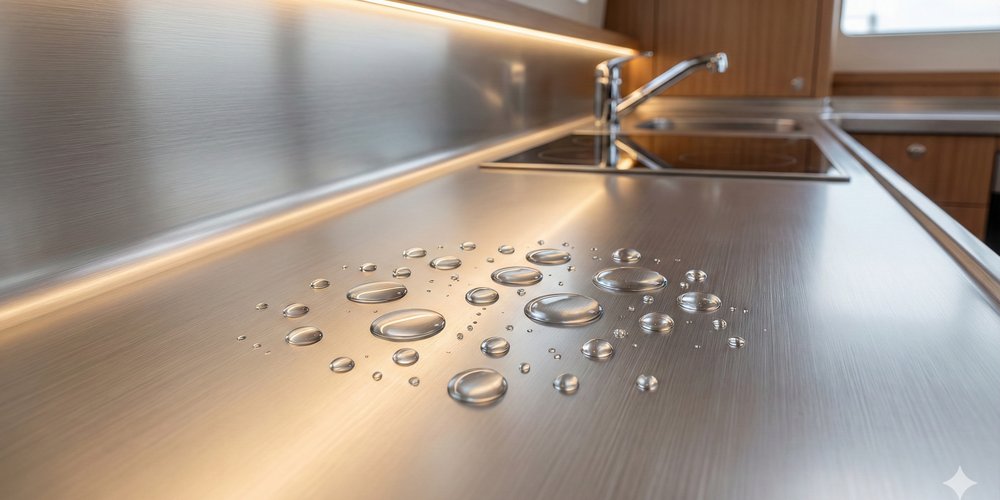
The biggest advantage of stainless steel is that its surface is non-porous and offers a smooth structure that does not allow bacterial colonies to settle without any coating. Unlike wood or composite materials, liquid absorption does not occur on steel surfaces and food residues or organic waste cannot seep into the depths of the surface. This physical property allows for total sterilization by ensuring that disinfectants contact every point of the surface during cleaning. The non-porous structure is the most critical line of defense that eliminates the risk of cross-contamination in kitchen and medical areas. The smooth texture does not wear out over time and keeps its hygienic form.
Hygienic Design Principles in Marine Galleys
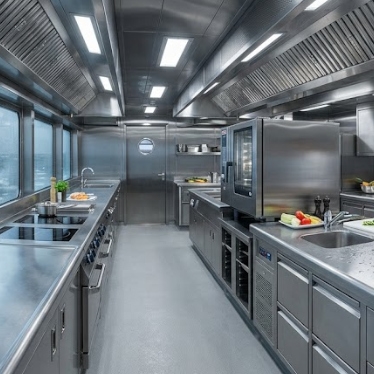
Professional yacht galleys require equipment that meets both mechanical durability and food safety standards because food preparation processes involve high-intensity operations in limited spaces. Chefs expect the cleaning of equipment to be fast and effective while working on a moving floor. UNOKS designs galley units with radiused inner corners and seamless joining techniques that do not allow dirt to accumulate. Steel systems speed up galley operations with their structures resistant to oil buildup and burnt food residues. A hygienic galley is the most important section that guarantees the health of the crew and guests. Engineering-oriented design provides maximum hygienic capacity in narrow areas. Stainless steel units increase sterilization speed because they withstand high-temperature steam cleaning.
Modular and Seamless Kitchen Units
The junction points of kitchen counters are areas where bacteria grow most easily in traditional methods but the advanced welding technologies of UNOKS eliminate these risks. Seamlessly designed work surfaces prevent liquid from leaking into internal parts and extend the life of the system. The modular structure allows each part to be disinfected separately or removed quickly when necessary. This flexibility increases operational speed and hygiene quality in the limited spaces of the boat. Fixed flange feet facilitate the cleaning of the floor and prevent wear due to vibration.
Hygiene in Operational Areas: Laundry and Pantry Systems
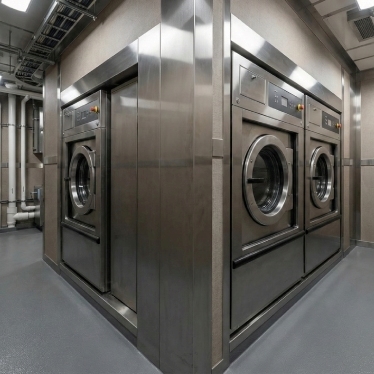
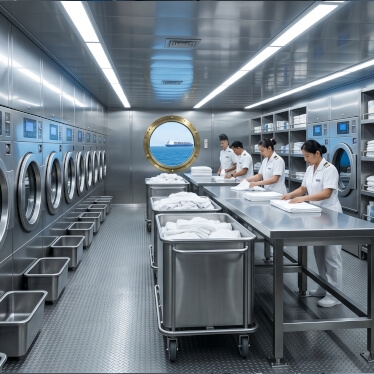
Hygiene needs on a boat are not limited to the galley and include laundry and storage areas covering a wide range from crew clothes to guest textiles. These regions with high humidity levels are the most risky points for the formation of fungi and mold. UNOKS uses corrosion-resistant stainless steel counters and sinks in laundry solutions to prevent deformation caused by moisture. Shelving systems used in pantries have special perforated structures that provide air circulation for the food. These systems prevent products from sticking to the surface and minimize food waste by preventing bacterial growth. The use of steel in technical storage areas directly affects the indoor air quality of the boat.
Household Appliances vs. Industrial Marine Equipment
Using household appliances in a marine environment is one of the biggest mistakes in the maritime sector. The following table shows the hygiene and durability differences between these two categories:
|
Feature Category |
Household Equipment |
Industrial Marine Equipment (UNOKS) |
Hygienic Gain |
|
Material Structure |
Plastic and low-grade steel |
AISI 316L / 304 Stainless Steel |
Prevents bacterial growth by 99% |
|
Surface Character |
Porous or coated |
Non-porous and smooth |
Provides easy sterilization |
|
Corrosion Resistance |
Medium or low |
Very high (Saltwater resistant) |
Eliminates rust and oxide risks |
|
Cleaning Time |
Long and difficult |
Fast and chemical resistant |
Saves labor and effort |
|
Heat Resistance |
High deformation risk |
Very high (Suitable for high heat) |
Suitable for heat disinfection |
|
Odor Absorption |
Absorbs odors over time |
Odorless |
Fresh and clean interior |
Energy Efficiency and Sustainable Hygiene
Modern industrial marine devices use smart energy management systems to consume limited power sources efficiently while maintaining hygiene standards. Dishwashing and laundry systems with low water consumption contribute to the protection of the fresh water reserve on the boat. Energy-efficient cooking units developed by UNOKS spread less heat to the environment and reduce the load on air conditioning systems. This situation lowers the carbon footprint of the boat and decreases operational costs. Sustainability starts with quality materials serving for many years without changing. An eco-friendly approach is a necessity to protect the marine ecosystem.
UNOKS Engineering and Tailored Solutions
Project-specific approaches are better than standard solutions because the architecture and operational capacity of every vessel are different. UNOKS analyzes every project with millimetric precision and makes every centimeter of the area functional. Technical drawings prevent the formation of "dead zones" that cannot be cleaned after installation. Custom-made hood systems catch oil vapor at the source and prevent the pollution of surrounding units. This tailored approach creates a technical hygiene discipline. The expert staff designs by considering the usage process after installation.
Ease of Maintenance and Operational Continuity
The maintenance processes of industrial marine equipment use the right materials to obtain maximum efficiency with minimum labor. Cleaning stainless steel surfaces requires only mild detergents and water to protect the indoor air quality of the boat. The lack of need for harsh chemicals keeps the corrosion resistance of the system fresh and reduces environmental damage. Regular cleaning protocols ensure that the passive layer on the steel stays active. Easy-to-clean systems for the crew allow daily routines to be more secure. Durable equipment shortens the time the boat stays in port for maintenance.
Safe and healthy cruising on the seas is possible when hygiene is a technical standard. 316L stainless steel technology makes this standard permanent and improves life on yachts and ships. UNOKS produces professional responses to the hygiene needs of the maritime industry with steel systems from galleys to pantries. Choosing quality materials is the most profitable investment to protect the value and safety of the boat. Hygiene is the foundation of the quality of life at sea.