The engineering of shipboard galley fire suppression systems requires a highly responsive, multi-layered architecture designed to instantly detect and neutralize localized thermal events within the high-risk environment of a maritime cooking space before the ignition can compromise the structural integrity of the vessel or spread through the extraction ductwork. Marine galley fire safety is governed by stringent SOLAS regulations and classification society mandates. These systems must operate autonomously during a crisis without relying on immediate human intervention. Ship kitchen fire protection relies on specialized chemical agents and rapid deployment mechanisms. The unique dynamics of high-temperature grease fires demand precise engineering solutions. Seamless integration with the ship's overall safety matrix is an absolute operational necessity.
Automatic Suppression Mechanisms and Agents
Implementing effective automatic suppression mechanisms necessitates the use of targeted wet chemical agents formulated specifically to combat Class F (or Class K) lipid-based fires by initiating a rapid saponification process that converts burning cooking oil into a non-combustible soap-like crust, thereby smothering the flames and preventing catastrophic re-ignition. Water alone accelerates boiling grease fires and spreads the hazard. Dry chemicals create immense cleanup challenges and can damage sensitive electrical components in the galley. Wet chemical agents provide rapid cooling to the underlying heat source. They are discharged through strategically placed nozzles integrated directly into the hood. These nozzles are aimed precisely at deep fat fryers, griddles, and open ranges. The spray coverage must overlap to ensure total suppression across all cooking surfaces.
Sensor Systems and Thermal Detection
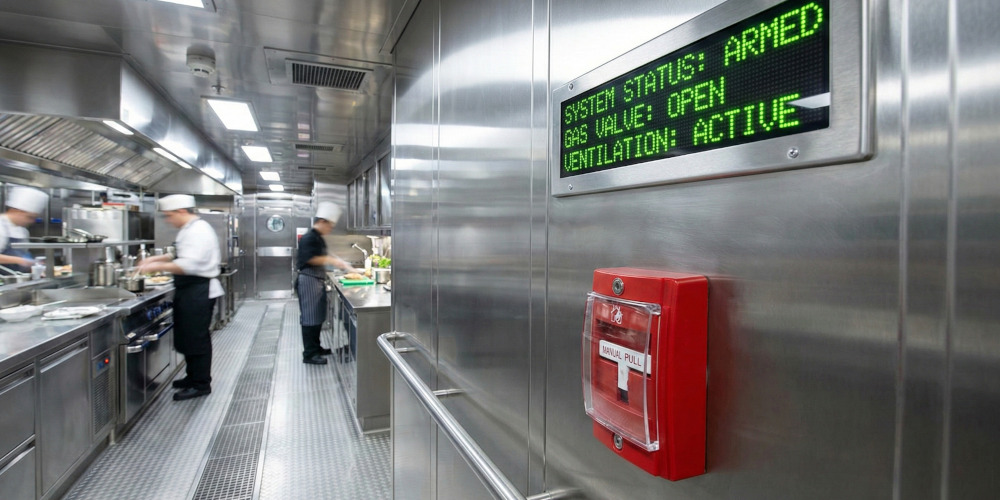
The reliable activation of these extinguishing protocols depends on an array of highly calibrated thermal sensors and mechanical fusible links installed directly within the extraction canopy, which are engineered to fracture or trigger an electrical signal the exact millisecond the ambient temperature exceeds a predetermined critical threshold. Modern shipboard systems often use dual-action detection networks. This redundancy minimizes the severe operational disruption caused by false alarms. Thermal probes monitor the exhaust airstream constantly for rapid temperature spikes. Mechanical tension cables provide a fail-safe trigger if the electronic sensors malfunction. Furthermore, manual pull stations provide an essential secondary activation method. These stations are prominently located at the galley exits. Crew members can activate the system immediately upon visual confirmation of a fire.
Integration with Ventilation and Gas Shut-Off Infrastructure
A critical component of marine galley fire safety is the electromechanical interlocking of the suppression unit with the vessel’s central infrastructure, ensuring that upon activation, the system simultaneously cuts off the electrical or gas supply to the cooking appliances while automatically adjusting the ventilation dampers to starve the fire of oxygen and prevent the extraction of active flames into the ducting. Fuel shut-off valves are mandatory for containment. Leaving the heat source active will quickly defeat the chemical extinguishing agent. Supply air fans are immediately deactivated to stop feeding oxygen to the fire. Fire dampers within the ductwork snap shut to isolate the galley zone. This integrated electromechanical response completely isolates the thermal hazard. It effectively protects the rest of the ship's interior from toxic smoke migration.
Ultimately, the deployment of a fully integrated fire suppression system is not merely a regulatory checkpoint, but a fundamental pillar of maritime survival. By combining rapid chemical deployment with intelligent electromechanical shutdowns, ship operators can safeguard their crew, protect their high-value assets, and ensure uninterrupted voyages across the globe.