Managing logistics on a multi-deck vessel—especially a cruise ship or a large luxury yacht—presents unique challenges, none more pressing than waste disposal. Transporting bags of dry waste through guest corridors or service elevators is not only inefficient but also compromises hygiene and the "silent service" luxury standard. This is where a chute waste system becomes indispensable. A marine chute system is a gravity-based vertical transport solution designed to move dry waste instantly from various decks directly to a centralized processing or storage room at the bottom of the vessel.
How a Marine Chute System Works: Gravity-Fed Logistics
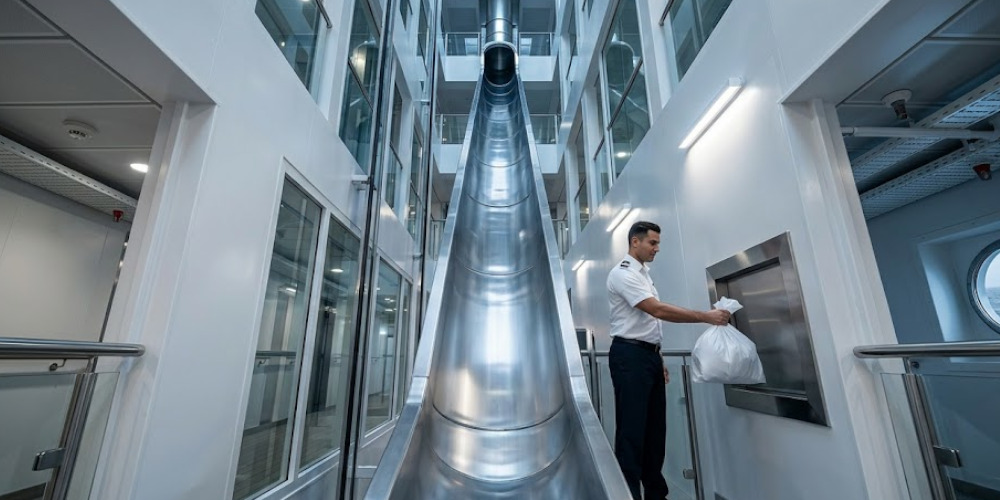
At its core, a chute system consists of a vertical stainless steel duct that spans multiple decks. On each floor, strategically placed inlet doors allow crew members to deposit bags of dry waste (such as paper, plastic, or general refuse).
The waste travels via gravity to a collection point, usually located in the garbage handling room on the lower decks. To withstand the constant impact and the corrosive maritime environment, these systems are constructed from high-grade AISI 316L stainless steel. This material ensures the internal surface remains smooth and rust-free, preventing waste bags from snagging or tearing during their descent.
Key Benefits for Modern Vessel Operations
Implementing a centralized dry waste management system offers three primary advantages for maritime operators:
-
Operational Efficiency: It eliminates the need for crew members to manually transport waste across horizontal corridors and vertical elevators. This significantly reduces labor hours and frees up service elevators for other critical tasks.
-
Superior Hygiene: By keeping waste inside a sealed vertical duct, the ship prevents the spread of odors, pests, and bacteria in guest areas. There is no risk of leaking trash bags in carpeted hallways.
-
Space Optimization: Vertical integration saves valuable square footage on service decks. Instead of having multiple temporary trash storage points on every deck, all waste is funneled to a single, controlled processing zone.
Safety and Engineering Standards: Fire and Odor Control
A chute system is not just a pipe; it is a complex engineering component that must meet strict maritime safety regulations, particularly regarding fire containment.
-
Fire-Rated Integrity: Inlets are equipped with A-60 fire-rated doors to ensure that the vertical shaft does not act as a chimney in the event of a fire. Automatic fire dampers and sprinkler nozzles are integrated throughout the system.
-
Interlocking Systems: Advanced systems use electronic interlocks to prevent multiple doors from being opened at the same time, maintaining pressure balance and preventing backdrafts.
-
Sanitization and Odor Neutralization: To maintain a 5-star environment, marine chutes include automatic cleaning cycles. High-pressure water nozzles at the top of the system wash the internal walls with disinfecting detergents, while odor-neutralizing units ensure that no "trash room" smells escape into the service areas.
Conclusion: A Modern Necessity for Waste Logistics
As vessels grow in size and environmental regulations become more stringent, efficient waste handling is a pillar of successful ship management. A chute system is more than a convenience; it is a high-performance logistics tool that ensures dry waste is handled safely, hygienically, and invisibly. By investing in a marine-grade stainless steel chute system, operators safeguard their vessel's interior environment while maximizing the efficiency of their crew and the comfort of their guests.