In the maritime industry, materials are subjected to a relentless chemical and physical onslaught. The combination of high salinity, constant moisture, extreme UV exposure, and mechanical vibration creates an environment where standard industrial materials fail within months. Among the limited catalog of suitable alloys, stainless steel—specifically marine-grade AISI 316L—stands out as the most reliable. Its reliability is rooted in its unique metallurgical composition, which provides a self-healing barrier against oxidation. For vessel operators, choosing the right material is not just about aesthetics; it is a fundamental strategy for ensuring structural longevity, operational safety, and absolute hygiene in confined spaces.
The Science of the Passive Layer: Self-Healing Metallurgy
The primary reason for the reliability of stainless steel is its "passive layer." Unlike carbon steel, which relies on external coatings or paints that can chip and lead to rapid sub-film corrosion, stainless steel contains a minimum of 10.5% chromium. When exposed to oxygen, this chromium reacts to form a microscopic, transparent, and chemically inactive layer of chromium oxide.
This layer is the "hidden hero" of the material; if the surface is scratched or dented by heavy impact in a high-traffic galley, the chromium oxide layer reformulates almost instantaneously in the presence of air or water. This inherent ability to self-heal is what makes the hidden hero of hygiene on yachts and ships: steel systems so vital for maintaining a sterile and rust-free environment throughout the vessel’s lifecycle.
316L: The Molybdenum Advantage Against Chlorides
While several grades of stainless steel exist, the marine environment specifically demands the 316L variant. The "L" denotes low carbon (minimizing carbide precipitation during welding), but the defining factor is the addition of 2-3% Molybdenum.
Molybdenum drastically increases the material's resistance to "pitting"—localized, deep-seated holes caused by chloride ions found in saltwater. In areas where salt spray is constant, such as laundry rooms or deck-adjacent galleys, standard 304 stainless steel will develop small brown spots (tea staining), whereas 316L remains pristine. This is why professional galley stainless steel furniture must be specified in marine-grade alloys to ensure the equipment does not become a structural liability after exposure to the ocean atmosphere.
Cross-Departmental Reliability: Galley, Laundry, and Medical
The reliability of stainless steel extends beyond simple corrosion resistance; its mechanical properties make it the ideal substrate for diverse shipboard departments:
-
Maritime Laundries: High humidity and exposure to aggressive detergents create a high-risk zone for rust. Utilizing laundry stainless steel furniture ensures that trolleys, sorting tables, and shelving do not transfer rust stains to expensive linens or guest clothing.
-
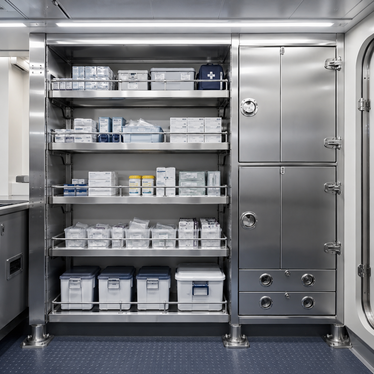
Medical Facilities: On cruise ships and large commercial vessels, the medical bay must meet clinical sterility standards. The non-porous nature of stainless steel means bacteria and viruses cannot penetrate the surface, making stainless steel equipment for medical products the only choice for preventing cross-contamination in the isolated environment of a ship.
Sustainability and Life-Cycle Cost (LCC)
From a financial perspective, stainless steel is the most reliable material due to its low Life-Cycle Cost. While the initial procurement cost of 316L is higher than aluminum or coated steel, it requires virtually zero specialized maintenance beyond routine cleaning with fresh water.
-
No Repainting: Eliminates the need for toxic anti-corrosive paints.
-
100% Recyclable: At the end of a vessel's 25-30 year lifespan, the stainless steel components retain significant scrap value and are fully recyclable, supporting global maritime sustainability goals.
-
Fire Safety: With a high melting point and zero flame spread, it provides a critical safety barrier in high-risk areas like the engine room and galley.
Conclusion
Reliability in the marine sector is defined by a material’s ability to perform without intervention. Stainless steel achieves this by combining chemical resistance with mechanical strength. By integrating marine-grade steel furniture and equipment across all departments, vessel owners safeguard their investment against the ocean’s corrosive nature, ensuring a safe, hygienic, and durable environment for crew and passengers alike.