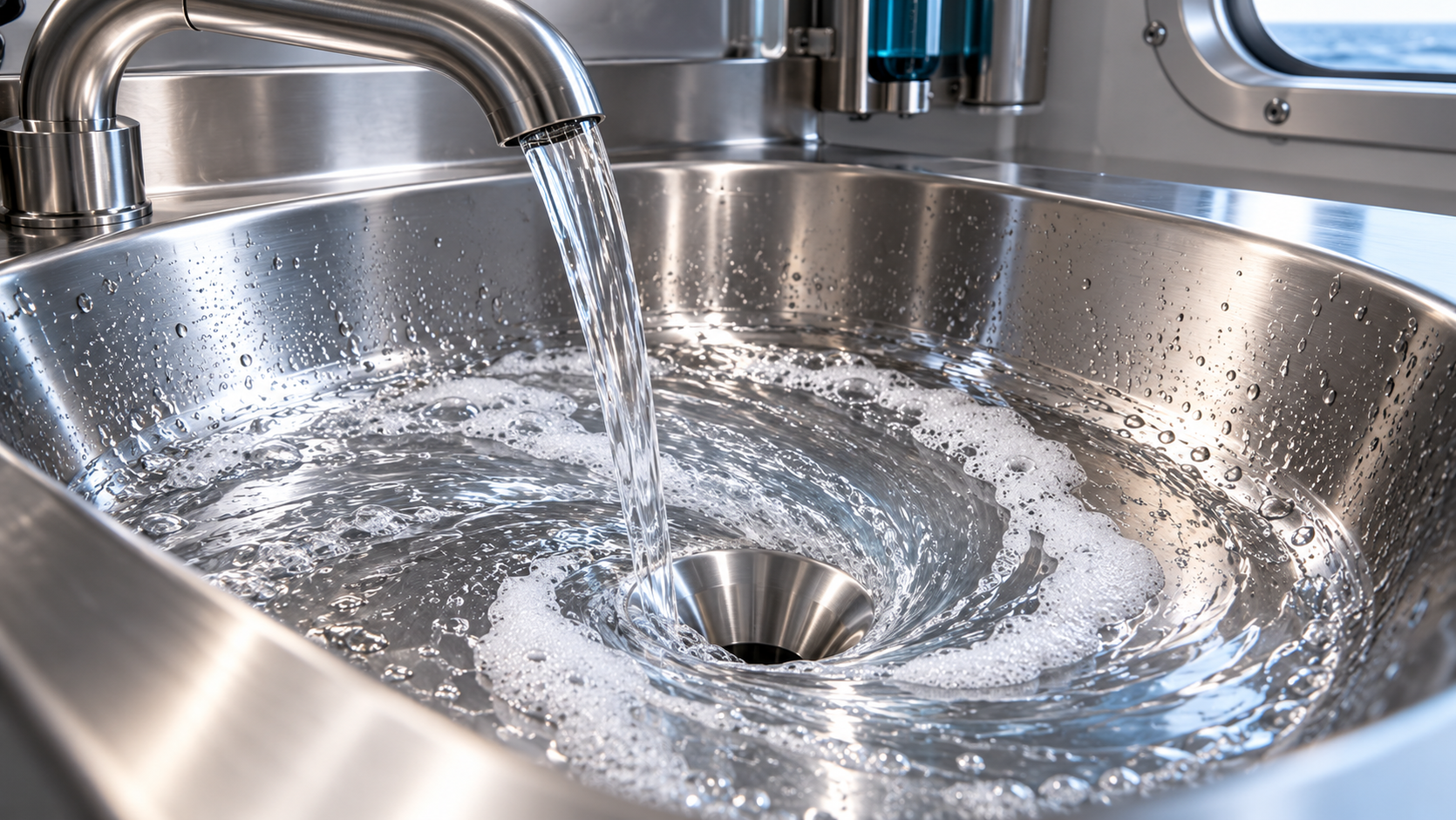
Shipboard medical facilities operate as isolated care units where containment of infectious agents is critical to crew safety and mission continuity. Whether serving on an expedition vessel, a deep-sea commercial bulk carrier, or a specialized naval platform, a vessel hospital must deliver hospital-grade sanitation within tight spatial boundaries subject to ship motion. At the core of this aseptic barrier is the surgical scrub sink, serving as the first line of defense against pathogen transmission before clinical interventions, wound dressing, or minor maritime surgery.
Specifying a scrub sink for offshore environments requires engineering beyond land-based hospital units to withstand dynamic vessel roll, limited potable water, and corrosive salt air.
Sanitary Design and Deep-Basin Geometry
In shipboard care spaces, splash prevention and surface drainage are paramount. Routine ship motions can turn minor splashing into cross-contamination hazards across nearby sterile packs or diagnostic equipment:
- Extra-Deep, Anti-Splash Basins: Marine surgical sinks feature high rear splashbacks and deep-drawn bowls engineered with steep inward slopes. This geometry directs washdown directly toward the central drain and prevents turbulent water recoil even when the vessel pitches in heavy seas.
- Seamless Coved Radiuses: All internal corners are pressed or ground with smooth radiuses without crevice seams. This eliminates stagnant water trapping, discouraging biofilm formation and bacterial colonies such as Pseudomonas and Staphylococcus.
- Hands-Free Actuation Systems: To prevent cross-contamination from gloved or unwashed hands, scrub stations utilize mechanical knee-paddle levers, infra-red sensor beams, or foot pedals. Infrared solenoids must feature water-resistant electrical housings and low-voltage marine DC or AC isolated feeds.
Marine Metallurgy: Selecting Resilient Stainless Steel
Medical spaces at sea undergo frequent disinfection using harsh biocides, chlorhexidine scrubs, and iodine compounds. Standard commercial finishes can quickly corrode when exposed to these chemicals alongside maritime humidity:
- Superior Marine Alloys: Surgical sinks in ship infirmaries rely on heavy-gauge AISI 316L austenitic stainless steel. The addition of molybdenum provides exceptional resistance against pitting and crevice attack from aggressive halogenated sanitizers and saline exposure.
- Electropolished and Satin Surfaces: Satin-grain mechanical polishing and electropolished inner bowls create an ultra-smooth, passive chromium-oxide layer that resists microscopic scratching from watch bands or surgical tools. This metallurgical integrity proves why high-grade alloys remain the hidden hero of hygiene on yachts and ships, particularly specialized steel systems.
- Integral Deck Flanging: Rather than wall-hung brackets that risk tearing out under severe heave, marine units feature floor-anchored pedestal cabinets or reinforced bulkhead backing plates welded securely to ship frames.
Plumbing Integration and Infection Control at Sea
Integrating scrub sinks into shipboard graywater and potable supply networks involves unique plumbing challenges governed by international maritime health guidelines:
- Laminar Flow vs. Aerators: Land-based sink aerators mix air into the water stream, producing fine aerosols that can vaporize and spread waterborne pathogens like Legionella. Marine medical faucets utilize laminar flow straighteners, delivering a solid, non-splashing stream of water.
- Integrated Thermostatic Mixing: Automated thermostatic mixing valves maintain a continuous delivery temperature between 38°C and 41°C. This ensures thorough surgical scrubbing without thermal shock, irrespective of freshwater supply temperature swings caused by engine room calorifiers.
- Trap Seals and Motion Venting: Vessel drainage lines experience sudden air pressure variations during ballast transfers or rolling seas. Marine scrub stations feature deep-seal anti-siphon P-traps with mechanical backflow preventers to stop sewer gas blowback into sterile compartments.
Upholding Shipboard Clinical Standards
A properly engineered marine scrub sink transforms a basic ship infirmary washpoint into a compliant, sterile decontamination zone. By prioritizing deep anti-splash profiles, touchless controls, and corrosion-proof AISI 316L construction, vessel operators and marine architects protect medical personnel and preserve crew health thousands of miles from shore.