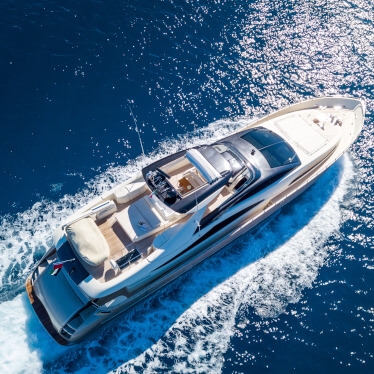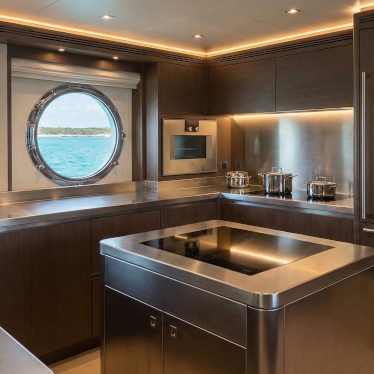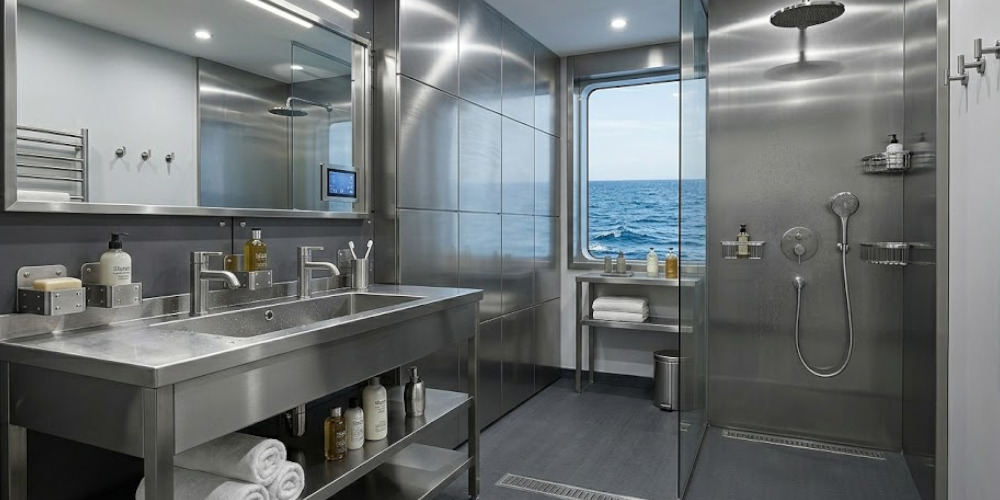
In the maritime industry, "wet areas"—including galleys, laundries, and pantries—are the most high-maintenance zones on a vessel. These spaces face a double threat: internal moisture from industrial operations and external corrosive pressure from the saline maritime atmosphere. Ensuring the longevity of wet area equipment requires a combination of superior metallurgy and disciplined maintenance protocols. When equipment fails due to corrosion or mechanical wear, the cost is not just the replacement part; it is the operational downtime of the vessel. Achieving a decades-long service life depends on understanding how materials interact with saltwater and implementing a "prevention-first" engineering approach.
The Foundation of Longevity: 316L Stainless Steel
The single most important factor in equipment lifespan is the initial material specification. In a marine environment, standard stainless steels are insufficient. Long-term reliability is anchored in the use of AISI 316L grade steel.
As explored in the analysis of why 316L stainless steel is indispensable in marine applications, the addition of Molybdenum provides the necessary defense against "pitting" and "crevice corrosion" caused by chloride ions.
-
Low Carbon Advantage: The "L" in 316L stands for low carbon, which prevents "sensitization" during welding. This ensures that the areas around joints and seams remain as corrosion-resistant as the rest of the surface, preventing structural failure at the most vulnerable points of the equipment.
-
Passive Layer Integrity: Maintaining the chromium-oxide passive layer is essential. For long-lasting use, equipment surfaces should be kept smooth and free of deep abrasions that could trap salt crystals and compromise this self-healing barrier.
Operational Maintenance: Protecting the Surface
Even the best maritime steel requires correct operational handling to reach its full life expectancy. Wet area equipment in galleys and laundries is often exposed to aggressive cleaning chemicals that can be as damaging as saltwater.
-
Chloride-Free Cleaning: Never use cleaning agents containing bleach or chlorides on stainless steel. These chemicals strip the protective passive layer, leading to rapid "tea staining" and eventual structural pitting.
-
Fresh Water Rinsing: In areas like the pantry or deck-adjacent galleys where salt air is prevalent, daily wiping with fresh water is the simplest and most effective way to prevent salt buildup.
-
Non-Abrasive Tools: Avoid steel wool or carbon steel brushes for cleaning. These leave behind microscopic carbon particles that will rust on the surface of the stainless steel, creating "galvanic corrosion" sites. Use only synthetic pads or stainless steel-specific brushes.
Installation and Structural Considerations
Longevity is often determined at the moment of installation. In the wet areas of a moving vessel, mechanical stress can accelerate chemical corrosion.
-
Vibration Dampening: Marine laundries and galleys are subject to constant engine vibration. Equipment should be mounted on vibration-absorbing flanged feet to prevent stress fractures in the steel frames over time.
-
Sealing and Drainage: Stagnant water is the enemy of maritime equipment. Ensure that all built-in units, such as sinks and prep tables, have a slight pitch toward the drain and are sealed with high-grade marine silicone to prevent water from seeping into hidden crevices where "crevice corrosion" can occur unseen.
-
Electrolysis Prevention: When mounting stainless steel equipment to a different metal (like an aluminum bulkhead), always use insulating gaskets or sacrificial washers to prevent galvanic cells from forming.
A Synergy of Material and Care
Long-lasting wet area equipment is the result of a synergy between high-grade 316L metallurgy and a rigorous maintenance culture. By specifying the correct marine-grade alloys and adhering to chloride-free cleaning regimes, vessel operators can ensure that their galleys, laundries, and pantries remain hygienic and structurally sound for the entire lifecycle of the ship. Investing in superior steel and proper care isn't just a maintenance task—it's a critical strategy for protecting the vessel's operational readiness.