Serving hot, safe, and appetizing meals to crew members and passengers on a strict maritime schedule requires dedicated thermal holding equipment. In commercial ship galleys, naval vessels, and offshore platforms, watch rotations mean meals cannot always be consumed immediately after cooking. Directly reheating delicate preparations over open elements risks burning, curdling, or drying out textures. To bridge the critical window between batch preparation and service, marine culinary operations rely on the bain-marie (water bath holding well).
Far from being a simple buffet accessory, a marine-grade bain-marie is an essential temperature-retention workstation engineered to withstand ocean movement, support food safety protocols, and ensure continuous service across shifting watch schedules.
The Operating Principle of a Bain-Marie
At its core, a bain-marie employs gentle, indirect heat transfer to keep cooked food within safe consumption ranges without continuing the active cooking process.
- Indirect Water-Jacket Heating (Wet Well): In a traditional wet bain-marie, immersion elements heat a shallow reservoir of water beneath standardized Gastronorm (GN) pans. The resulting steam and hot water create a protective thermal jacket around the vessel, transferring heat evenly through the stainless steel pan walls.
- Conduction and Radiation (Dry Well): Dry models utilize electric heating pads or infrared elements beneath each pan cut-out. While dry systems eliminate water-handling routines, wet-bath systems remain the premier maritime standard for holding delicate sauces, gravies, and starch dishes without scorching bottom layers.
- Cold Wells for Chilled Service: The bain-marie principle also applies to cold food lines. Refrigerated wells circulating eco-friendly refrigerants or static cold contact plates keep prepared salads, dressings, and cold cuts below critical microbial thresholds throughout buffet services.
Marine-Grade Design: Engineering Beyond Standard Land Units
Standard commercial food warmers installed in land restaurants are poorly suited to the physical conditions of an ocean-going vessel. A genuine marine holding well features specific structural reinforcements to manage dynamic vessel roll, vibration, and sanitation demands:
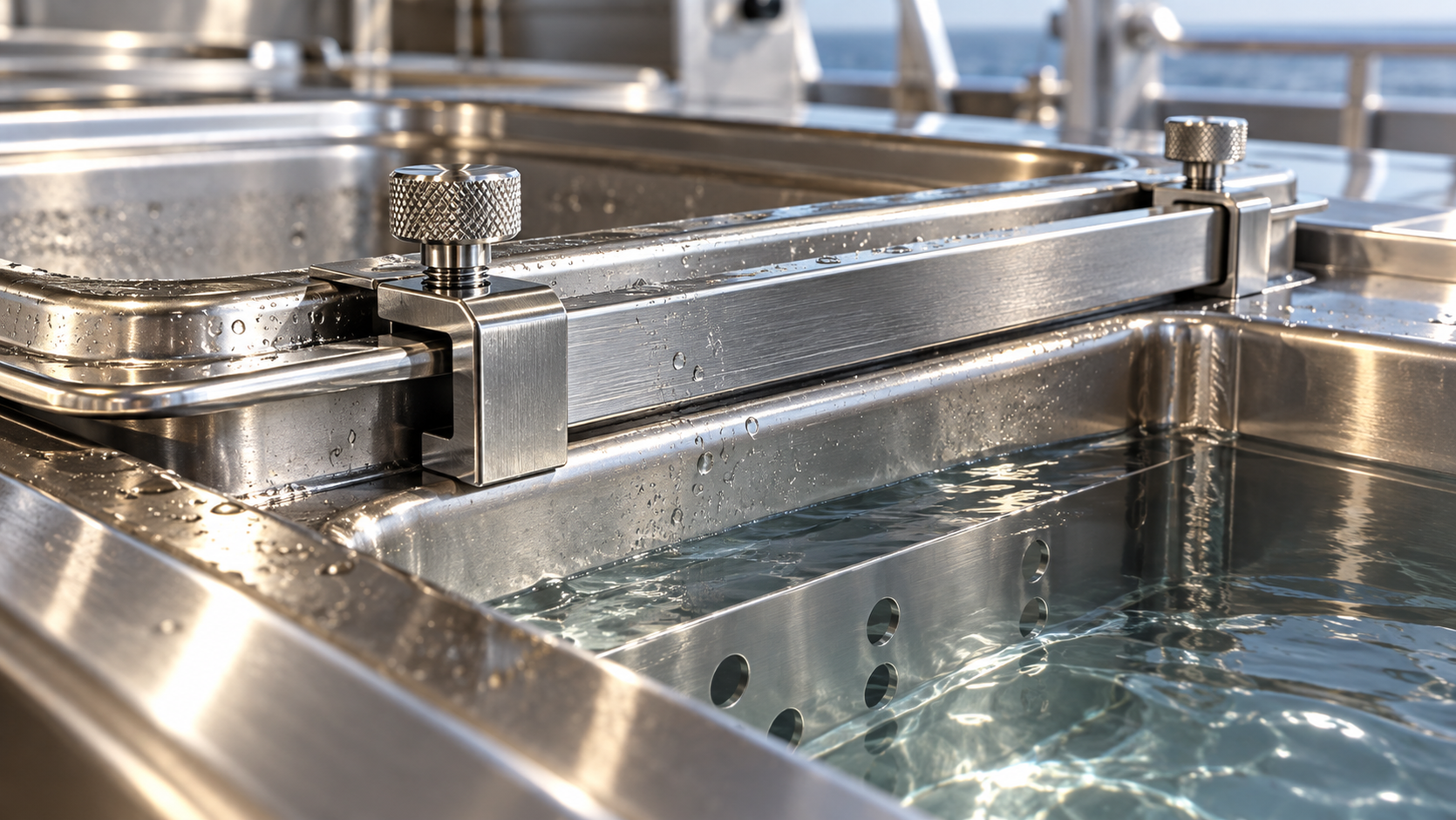
- Integrated Anti-Slosh Baffles: When a ship pitches in rolling seas, water in a conventional open bath sloshes against pan edges, causing hot water to spill onto deck plating or flood adjacent pans. Marine wells feature internal wave baffles, perimeter overflow dams, and restricted compartment channels to suppress fluid motion.
- Mechanical Pan Locks and Retention Bars: Vessel motion can dislodge standard drop-in containers. Marine holding lines incorporate positive cam-action locking tabs or heavy-duty top retention rails that anchor GN containers firmly into position during heavy weather.
- Seamless Heavy-Gauge Metallurgy: Marine units utilize continuous-welded AISI 304 or AISI 316L stainless steel wells with generous internal radius corners. Seamless deep-drawn construction prevents water ingress into internal electrical elements and eliminates stagnant crevices where food debris can fester.
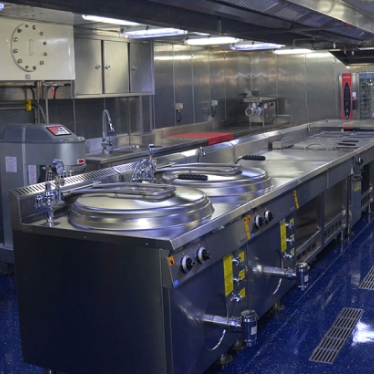
- Deck and Counter Integration: Rather than free-standing tabletop units prone to sliding, marine operations install specialized built-in components like drop-in hot bain-maries directly into reinforced serving counters and mess-room distribution islands.
HACCP Compliance and Shipboard Food Safety
Under international maritime health guidelines, including the Maritime Labour Convention (MLC 2006) and the USPH Vessel Sanitation Program (VSP), keeping food outside the microbial "danger zone" is mandatory to prevent gastrointestinal outbreaks at sea.
- Critical Temperature Thresholds: Marine bain-maries must consistently maintain core food temperatures at or above 63°C (145°F) for hot holding, or at/below 5°C (41°F) for cold holding.
- Independent Well Thermostats: Advanced multi-well configurations feature independent digital thermostatic controllers for each pan section. This allows chefs to hold dense soups at higher temperatures while keeping delicate cream-based sauces at a gentle holding heat.
- Controlled Drainage Systems: Draining large volumes of scalding water during vessel motion poses severe burn hazards. Marine units incorporate recessed, high-temperature ball valves connected directly to hard-piped shipboard drain lines, preventing manual bucket transport across rolling decks.
Vital Equipment for Crew Welfare and Service Uptime
Whether supporting three-shift catering on a commercial container carrier or serving formal dining lines aboard an expedition cruise vessel, the bain-marie ensures meal consistency, food safety, and flexible service. By investing in purpose-built marine units with anti-slosh engineering, rigid pan retention, and precision thermal controls, fleet managers safeguard crew nutrition while keeping daily galley operations strictly aligned with international maritime health codes.