Operating an outdated commercial galley at sea introduces severe operational liabilities, ranging from excessive power draw and frequent maintenance downtime to heightened fire hazards and regulatory non-compliance. Over years of intensive ocean voyages, high-temperature cooking appliances, heavy vibration, and humid saline air degrade internal catering infrastructure. Executing a strategic marine galley retrofit revitalizes onboard food preparation zones, bringing the space up to modern safety, ergonomic, and environmental benchmarks without the expense of a newbuild.
Determining the right time to modernize and following a structured renovation roadmap ensures a smooth transition during scheduled shipyard dry-dock periods.
When to Upgrade: Key Indicators for a Galley Retrofit
Waiting for complete equipment failure at sea can compromise crew welfare and halt vessel operations. Ship operators should monitor clear trigger points indicating an urgent need for renovation:
Escalating Maintenance Costs and Parts Obsolescence: If legacy cooking ranges, deep fat fryers, and dishwashers require frequent repairs and replacement components are discontinued, ongoing upkeep becomes financially unsustainable.
Persistent Thermal and Ventilation Issues: Excessive ambient heat and poor extraction indicate that aging exhaust hoods and grease filters are underperforming, increasing fire risks under SOLAS Chapter II-2 guidelines.
Compliance Gaps and Inspection Flags: Port State Control (PSC) or MLC 2006 inspections citing inadequate food storage temperatures, poor hygiene separation, or non-compliant stainless steel metallurgy require immediate corrective action.
Energy Inefficiency and Base-Load Strains: Traditional high-consumption appliances draw substantial auxiliary power, conflicting with fleet decarbonization strategies and Carbon Intensity Indicator (CII) optimization targets.
How to Execute a Successful Marine Galley Retrofit
Upgrading a shipboard kitchen within tight dry-dock windows requires meticulous planning and marine-specific engineering.
1. 3D Scanning and Ergonomic Workflow Redesign
Modern retrofits begin with high-precision 3D laser scanning to capture exact interior dimensions, deck camber, and bulkhead structural frames. Designers establish a non-reversible linear workflow separating raw prep, thermal cooking, plating, and dishwashing zones to maximize efficiency in compact footprints.
2. Upgrading to High-Performance Marine Galley Equipment
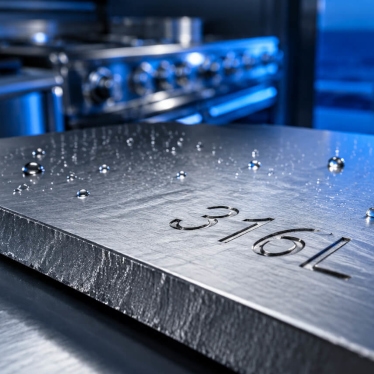
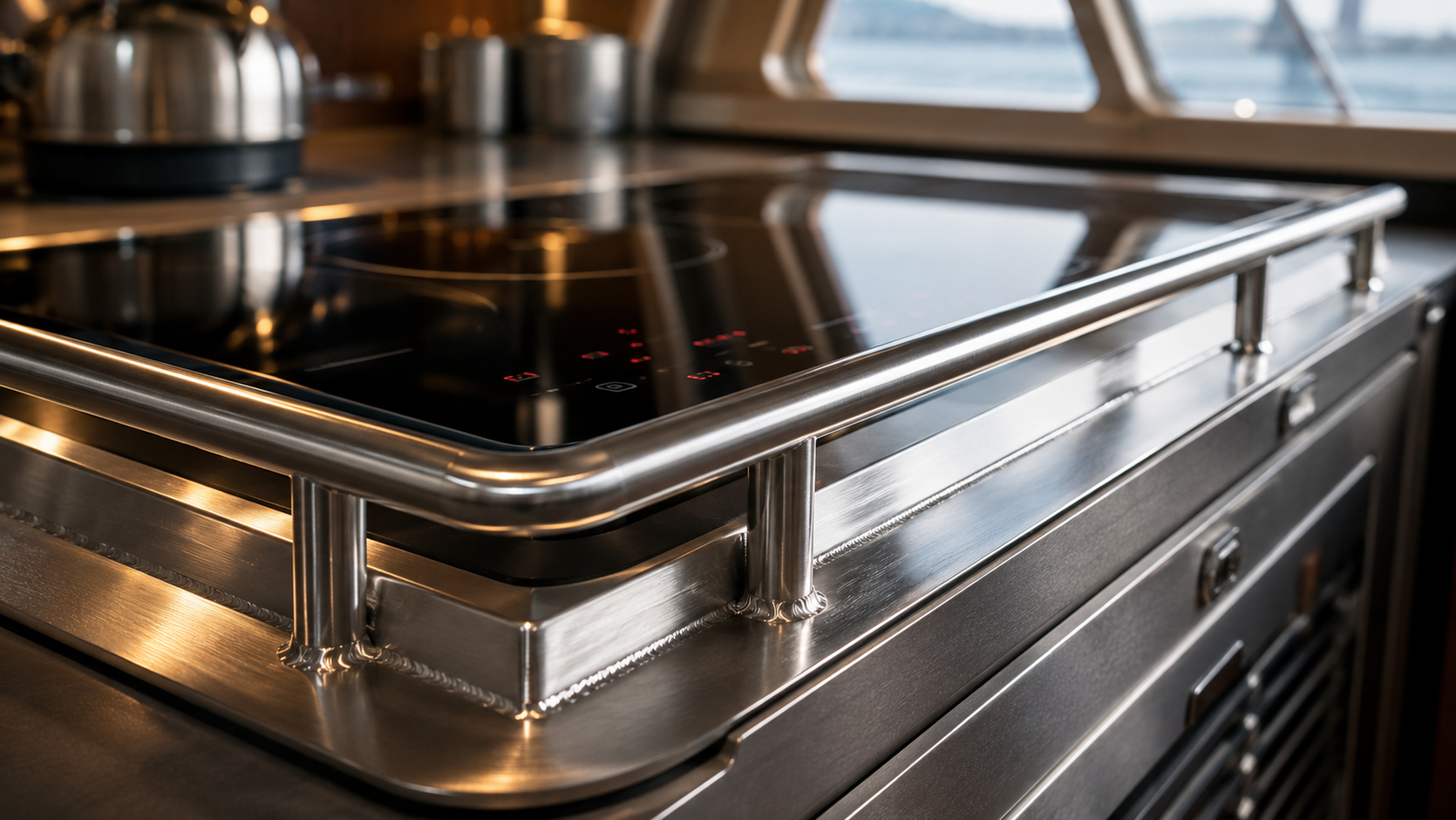
Replacing worn units with purpose-built marine galley equipment ensures resilience against ocean dynamics. Upgraded installations feature AISI 304 and AISI 316L stainless steel counters, heavy-duty storm rails, secure mechanical latching systems, and marine-certified flanged feet bolted to the deck.
3. Boosting Efficiency and Fire Safety
Transitioning from resistive cast-iron hotplates to smart induction ranges slashes standby thermal loss, providing a proven pathway toward improving marine galley energy efficiency. Retrofits should also integrate automatic galley fire-suppression systems (such as wet chemical injection) and advanced UV-C grease-elimination extraction hoods.
Dry-Dock Installation, Testing, and Handover
During the vessel's dry-dock period, specialized outfitting teams remove legacy machinery, inspect sub-deck plating for corrosion, and install pre-fabricated modular counters. Power feeds, fresh water lines, and drainage loops are connected and pressure-tested before sea trials. Final commissioning validates maximum electrical load balancing, extraction airflow rates, and safety interlocks prior to vessel departure.
Long-Term Value Through Modernization
A well-engineered marine galley retrofit transforms a high-maintenance kitchen into a safe, compliant, and energy-efficient catering hub. By upgrading to durable stainless steel marine equipment, optimizing layouts, and integrating energy-efficient technologies, shipowners cut operational costs, safeguard crew health, and extend the operational life of their fleet.