Ship outfitting is the crucial phase in shipbuilding that transforms a bare steel hull into a fully functional, operational vessel. While naval architecture defines a ship’s hydrodynamics and structural hull integrity, outfitting integrates all internal systems, machinery, accommodation quarters, and utility spaces. From commercial cargo ships and navy vessels to luxury superyachts, executed marine outfitting ensures that every operational zone meets strict safety standards, ergonomic needs, and regulatory compliance.
Executing a successful outfitting project requires seamless coordination among naval architects, marine engineers, interior outfitters, and specialized equipment manufacturers across four primary phases.
1. Engineering, 3D Spatial Planning, and Pre-Outfitting
Modern vessel outfitting begins long before steel cutting through advanced digital engineering and spatial modeling.
Integrated 3D Modeling: Engineers use detailed CAD and digital twin simulations to map out mechanical, electrical, and plumbing (MEP) routes. This prevents spatial collisions between structural framing, HVAC ducting, and heavy machinery.
Modular Pre-Outfitting: To shorten shipyard build times, modern ship construction relies on advanced modular block building. Outfitting components—such as pipe banks, cable trays, and foundation frames—are installed inside hull blocks while they are still open and turned upside down in the workshop.
Ergonomic and Workflow Optimization: Specialized zones like galleys, laundries, and medical bays are mapped to ensure efficient traffic flow, compliance with MLC 2006 crew welfare standards, and rapid access for routine maintenance.
2. Equipment Manufacturing and Marine Standardization
Standard land-based equipment fails quickly at sea due to constant structural vibration, high saline air, and dynamic ship motion. Turnkey ship outfitting relies on purpose-built marine equipment manufactured to withstand harsh ocean environments.
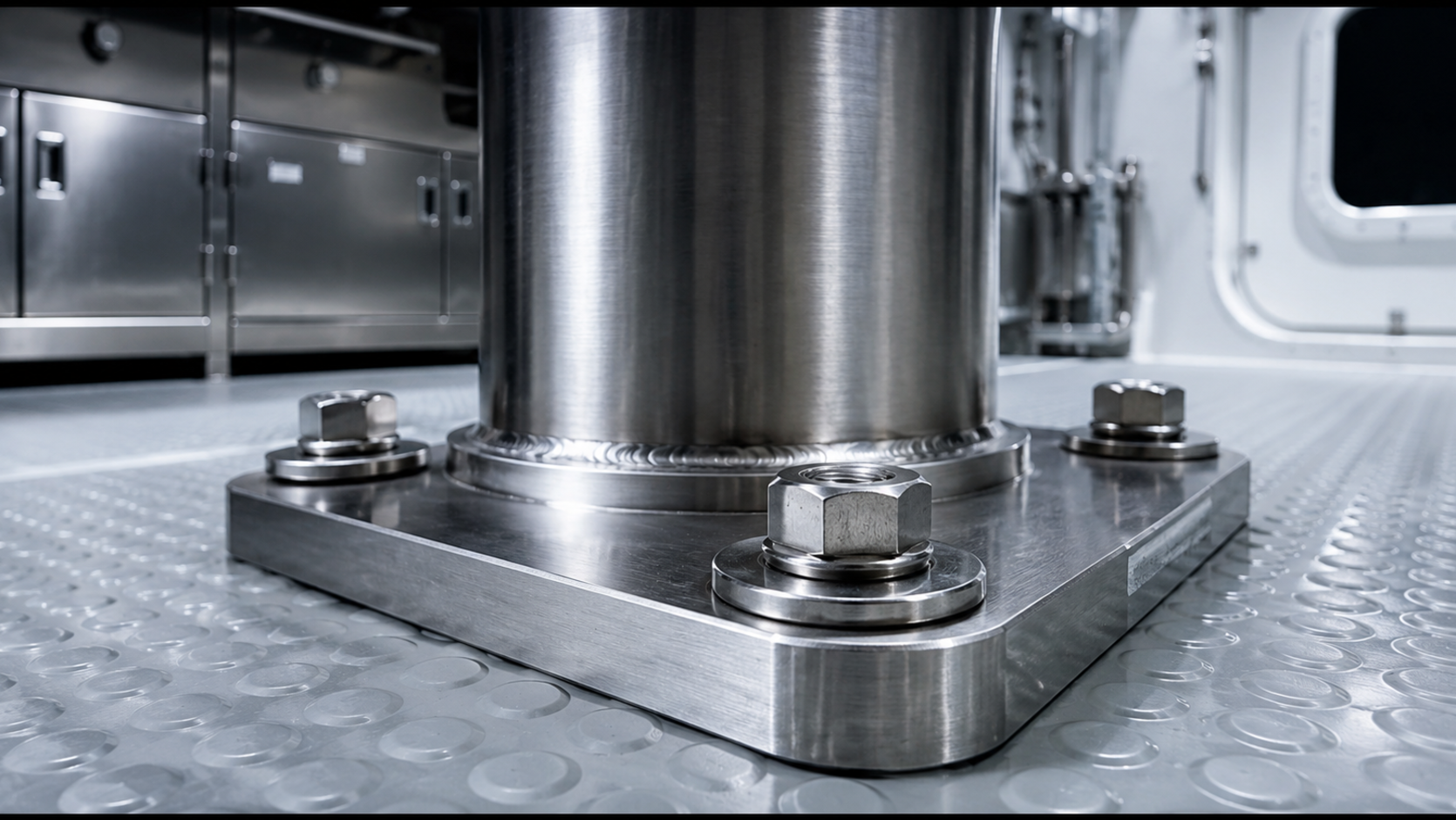
During this stage, specialized manufacturers fabricate heavy-duty internal infrastructure using marine-grade materials such as AISI 304 and AISI 316L stainless steel. For example, custom marine galley equipment must be engineered with integrated storm rails, marine-voltage heating elements, and secure flange feet. Similarly, installing ruggedized marine laundry equipment requires internal vibration dampers and reinforced locking latches to maintain operational reliability during heavy swells.
3. Onboard Installation and Systems Integration
Once the hull blocks are joined, the primary onboard installation phase begins. Specialized fitting teams enter the vessel to mount internal structures, paneling, and utility machinery.
Structural Mounting and Welding
Equipment must be permanently secured to the vessel’s deck or structural bulkheads. Heavy machinery is either argon-welded directly to structural foundations or through-bolted using heavy-duty flanged feet to resist roll-and-pitch forces.
Utility Interconnections
Installation teams connect equipment to the vessel’s central infrastructure. This includes wiring power lines to marine distribution boards, connecting fresh water and graywater piping, and joining exhaust hoods to the ship's central HVAC extraction network.
4. Testing, Sea Trials, and Commissioning
The final stage of ship outfitting is rigorous testing and commissioning to verify that all installed systems operate safely under actual sea conditions.
Before handing the vessel over to the owner, engineers conduct static shore power tests, checking electrical safety, pipe pressure integrity, and emergency shutoff systems. During sea trials, outfitting machinery is tested under dynamic hull vibration and maximum electrical load. Port State Control (PSC) officers and classification societies inspect the outfitting installation to issue official safety and compliance certificates.
Turning Blueprints into Operational Reality
Ship outfitting is a complex engineering discipline that bridges naval architecture and operational reality. By combining precise 3D digital planning, durable marine-grade equipment manufacturing, expert onboard installation, and thorough commissioning, outfitters deliver safe, efficient, and fully functional vessels ready for international waters.