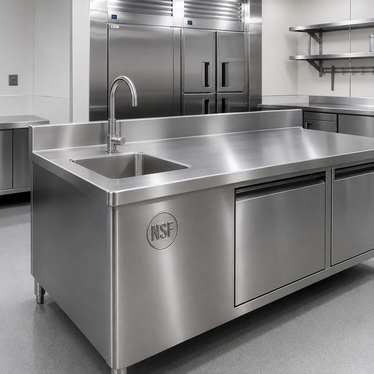
Designing a galley for an ocean-going commercial vessel, offshore platform, or superyacht requires balancing uncompromising culinary output against rigid spatial constraints. Shipboard food preparation spaces are bounded by structural bulkheads, deckhead wiring trays, and irregular hull curvatures. Traditionally, galleys relied on fully custom, field-welded stainless counters that locked equipment into permanent positions. When a major appliance failed or required servicing, shipowners faced disruptive yard visits, flame-cutting through bulkheads, and prolonged downtime.
Modern naval architecture avoids this operational bottleneck through modular design. By standardizing component dimensions, utility quick-connects, and demountable base frames, modular outfitting delivers long-term flexibility, rapid maintenance, and superior ergonomic performance at sea.
Overcoming Spatial Bottlenecks Through Standardized Footprints
Space aboard any vessel carries a high premium. Modular marine galley systems maximize usable square meters by aligning cooking ranges, prep stations, refrigeration units, and scullery modules along standardized grid footprints:
- Standardized Dimensional Grids: Fabricating counters, lower storage cabinets, and overhead shelving around coordinated metric widths (such as 400 mm, 600 mm, 800 mm, and 1200 mm) eliminates dead space, awkward gaps, and inaccessible corners.
- Vertical Volume Utilization: Standardized modular uprights integrate overhead storage lockers, drop-down utensil racks, and localized extraction hoods directly above work counters. This structural efficiency is critical for compact marine galley space optimization, preserving clear central gangways for crew movement during watch turnarounds.
- Multi-Function Prep Stations: Modular inserts allow work counters to shift roles throughout the day. Removable cutting boards, drop-in Gastronorm pan holders, and integrated scrap chutes transform a single preparation surface from vegetable prep in the morning to plated staging during lunch service.
Simplified Maintenance, Serviceability, and Fast Swaps
The true return on investment for modular marine construction reveals itself during scheduled maintenance and emergency equipment replacements:
- Through-Hatway Transportability: A persistent headache during ship retrofits is navigating replacement hardware through narrow watertight doors, steep companionway ladders, and vertical equipment access hatches. Modular systems break down into discrete sections sized specifically to clear standard marine hatch openings, eliminating the need to cut structural hull access windows.
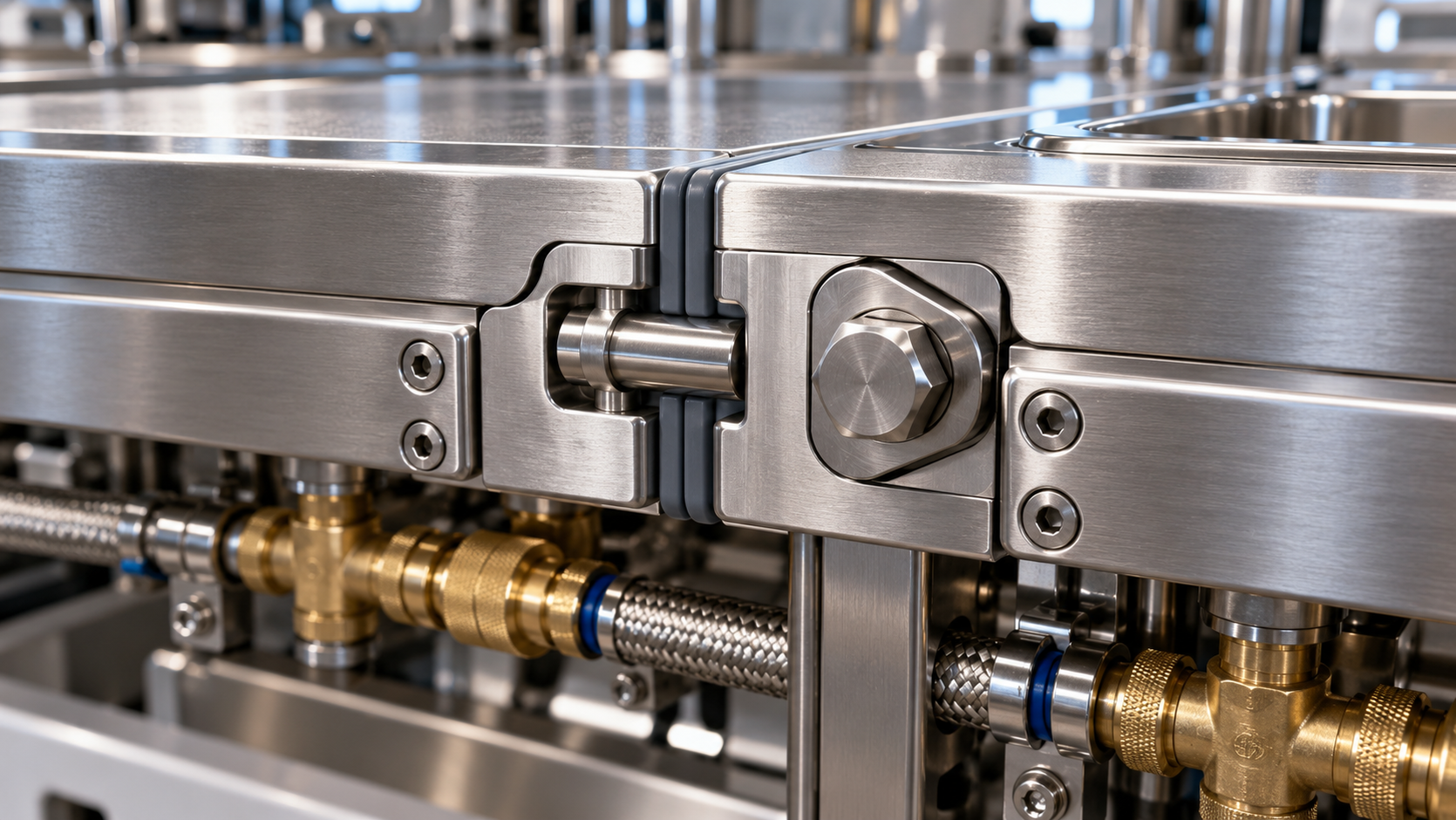
- Standardized Utility Quick-Disconnects: Water, drainage, electrical feeds, and data connections terminate at centralized interface panels with uniform quick-disconnect fittings. Technicians can slide out a malfunctioning convection oven or modular bain-marie for bench repair without shutting down services to adjacent cooking blocks.
- Independent Module Replacement: If a vessel’s operational profile changes such as an offshore supply vessel converting into a seismic survey ship with an expanded crew, operators can swap out modular storage blocks for high-capacity holding cabinets without tearing out baseline infrastructure.
Marine-Grade Structural Integrity and Sea Fastening
A common misconception is that modular equipment lacks the rugged durability of continuous welded installations. Marine-grade modular systems achieve heavy-duty endurance through purpose-built seafaring engineering:
- Interlocking Sub-Frame Assemblies: Individual modules bolt together securely through precision laser-cut gusset plates and heavy-gauge structural channels, forming a unified, vibration-resistant galley line that acts as a single structural assembly during heavy vessel roll.
- Deck-Coaming Anchors and Flanged Marine Feet: Modular base cabinets mount onto elevated perimeter deck coamings or reinforced stainless steel marine feet welded directly to deck plating. This protects internal electrical conduits from washdown water while allowing individual units to unbolt cleanly during drydock overhauls.
- Vibration Damping and Rattle Elimination: Pre-engineered rubber-bushed mounting points isolate rotating compressor vibrations from ship framing and silence metal-on-metal rattling during continuous transit.
Engineering Adaptability for Long-Term Fleet Value
Modular galley design bridges the gap between customized spatial requirements and rapid operational serviceability. By replacing rigid, permanent structures with adaptable, standardized stainless steel systems, shipbuilders and fleet operators secure significant advantages: faster yard installation schedules, shorter maintenance turnaround windows, and a galley infrastructure capable of evolving over the vessel's multi-decade lifecycle.