The European Union’s decarbonization roadmap for maritime transport reaches a major enforcement milestone in mid-2026. Under the FuelEU Maritime regulation, every commercial vessel over 5,000 gross tonnage calling at EU or EEA ports must hold a verified FuelEU Document of Compliance. Failing to meet annual Greenhouse Gas (GHG) intensity reduction targets will result in severe financial penalties, calculated directly against every gigajoule of non-compliant energy consumed on board.
For shipowners, operators, and technical managers, achieving compliance is no longer limited to evaluating alternative fuel readiness; it demands an immediate, fleet-wide optimization of all auxiliary energy systems and onboard power consumers before the regulatory hammer falls.
Core Requirements of FuelEU Maritime
The FuelEU Maritime framework establishes strict, legally binding caps on the well-to-wake (WtW) GHG intensity of energy used on board vessels trading within the European Economic Area.
Mandatory GHG Intensity Limits: Regulations mandate a step-by-step reduction in the average annual GHG intensity of energy used by ships. Starting with a 2% reduction baseline, the limits tighten progressively toward zero-emission targets by 2050.
100% vs. 50% Energy Scope: The regulation applies to 100% of the energy used on voyages between EU/EEA ports and at berths in EU ports, as well as 50% of the energy consumed on international voyages entering or exiting EU waters.
The FuelEU Document of Compliance (DoC): By June 30 of each verification year, operators must hold an official DoC issued by an accredited verifier. Without this document, vessels risk port access bans and heavy financial sanctions.
Calculating GHG Intensity and Penalty Structures
Compliance is calculated based on the total mass of fuel consumed multiplied by its certified Well-to-Wake emission factor, divided by the total energy used (expressed in megajoules).
If a vessel's calculated GHG intensity exceeds the regulatory target, a penalty is imposed. The FuelEU penalty formula is heavily weighted: for every gigajoule of over-emitted GHG equivalent, the financial assessment increases exponentially. For large vessels operating on heavy fuel oil without energy recovery mechanisms, annual penalties can easily reach hundreds of thousands of euros.
Flexibility Mechanisms: Banking, Borrowing, and Pooling
To help operators manage compliance across diverse fleets, the regulation introduces three structural mechanisms:
Banking: Surplus compliance units achieved in one year can be saved for subsequent reporting periods.
Borrowing: Operators can advance a limited compliance surplus from the next reporting year, subject to a 10% interest penalty on the borrowed amount.
Fleet Pooling: Ships can pool their compliance balance, allowing over-performing vessels (e.g., LNG or dual-fuel ships) to offset the deficit of conventional vessels within the same management pool.
Auxiliary Power Optimization: Minimizing Onboard Energy Demand
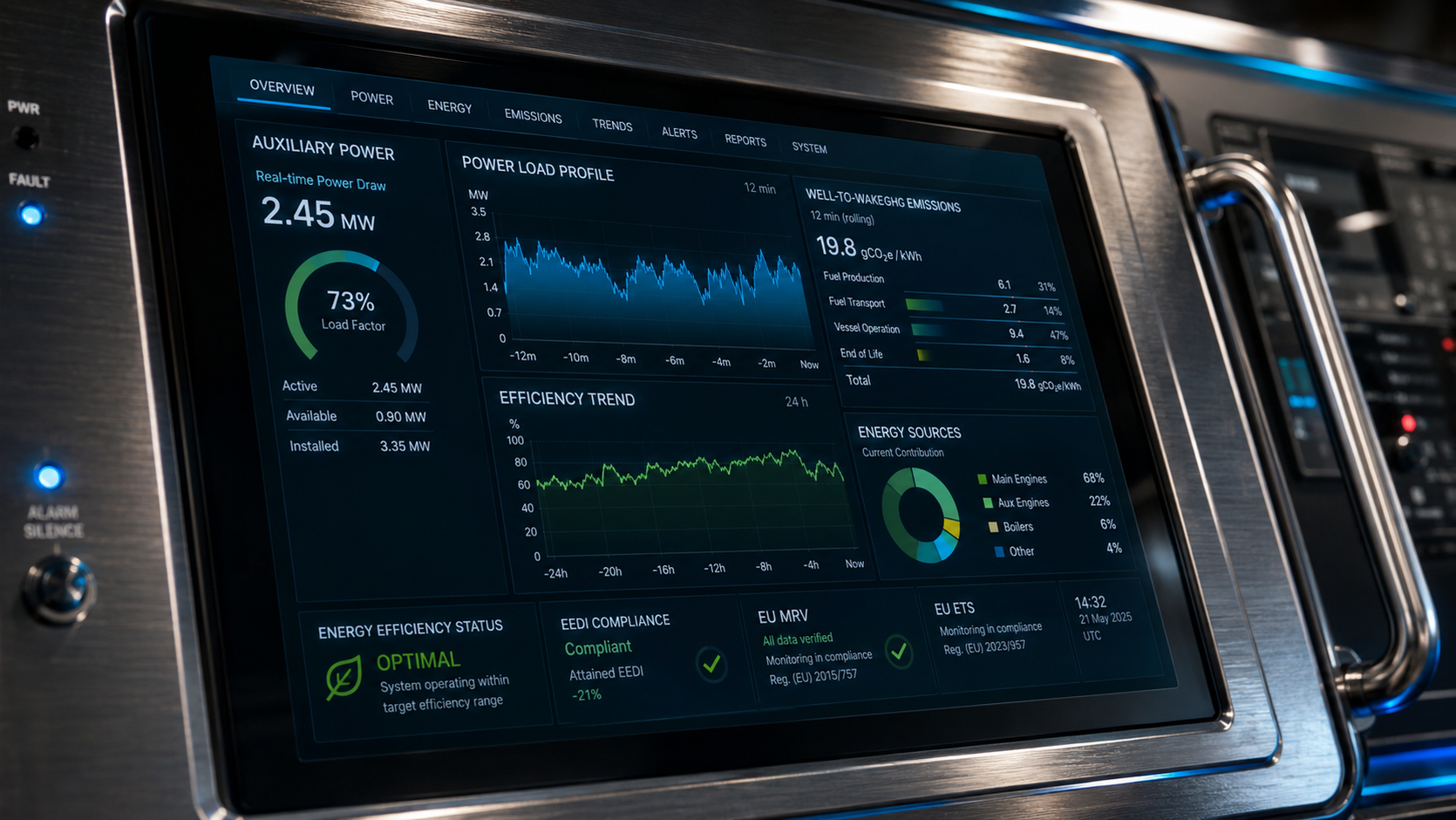
While adopting bio-marine fuels and e-methanol is the long-term pathway to compliance, reducing the ship's overall electrical base load provides an immediate, cost-effective defense against FuelEU penalties. Every kilowatt-hour saved by auxiliary equipment directly reduces the total energy denominator in the FuelEU GHG intensity formula.
Commercial galleys and crew laundries are among the largest continuous electrical consumers on board. Upgrading legacy systems to ultra-efficient, marine-certified equipment cuts generator fuel burn during transit and while berthed in port.
For instance, deploying specialized FuelEU-compliant marine laundry equipment utilizing heat-pump technology slashes drying energy consumption by up to 60%. Similarly, integrating smart, induction-driven energy-efficient galley equipment for FuelEU compliance eliminates standby thermal loss in cooking spaces, ensuring that auxiliary generators draw minimum fuel while operating in EU waters.
Immediate Action Items for Fleet Operators
Achieving FuelEU Maritime compliance requires a proactive, dual-track strategy: securing certified low-carbon fuel supply chains while aggressively lowering onboard auxiliary energy demand. Ship operators must audit their current fuel intensity, upgrade inefficient shipboard utility infrastructure, and set up verified monitoring protocols immediately. By optimizing auxiliary power draw today, operators protect their fleet against escalating penalties, safeguard EU port access, and secure long-term operational resilience.