Shipboard laundry operations represent a massive, often overlooked utility drain during long voyages. Traditional marine laundry systems consume thousands of liters of fresh water and substantial electrical energy daily, increasing fuel demand and expanding the vessel's environmental footprint. With international maritime authorities imposing stricter decarbonization targets, reducing auxiliary energy consumption has moved from a voluntary ecological choice to an operational necessity.
Deploying specialized, high-efficiency laundry setups allows vessel operators to dramatically lower fresh water usage, recover wasted thermal energy, and directly improve the ship's overall carbon efficiency profile.
The Water Challenge: Low-Water Wash Cycles and MARPOL-Compliant Reuse
Fresh water is a precious resource at sea. Generating it via reverse osmosis desalination or flash evaporators requires continuous engine load and fuel consumption.
Advanced Low-Water Utility Cycles: Modern sustainable laundry systems utilize precision-engineered drum designs and smart water-level sensors to optimize liquid volume per kilogram of fabric. These units maximize mechanical wash action, reducing overall water usage by up to 40% compared to legacy equipment without compromising sanitization standards.
Wastewater Filtration and Graywater Recovery: Under strict MARPOL Annex IV environmental protocols, managing graywater discharge is highly regulated. Implementing advanced wastewater filtration loops allows laundry systems to capture, filter, and safely divert final rinse water for primary wash pre-soaking cycles or other approved technical shipboard tasks, lowering total wastewater volume.
Biodegradable Chemical Management: High-efficiency washers integrate automated liquid dosing systems that calibrate exact chemical levels based on weight. This precision prevents chemical overdosing, ensuring that the wastewater remains fully compatible with onboard membrane bioreactor (MBR) treatment plants.
Thermal Optimization: Heat Recovery Dryers and Exhaust Integration
Industrial tumble dryers are among the highest energy-consuming appliances on any commercial vessel or luxury yacht. Standard dryers vent hot, humid air straight out of the ship's hull, discarding massive amounts of usable thermal energy.
Closed-Loop Heat Pump Dryers
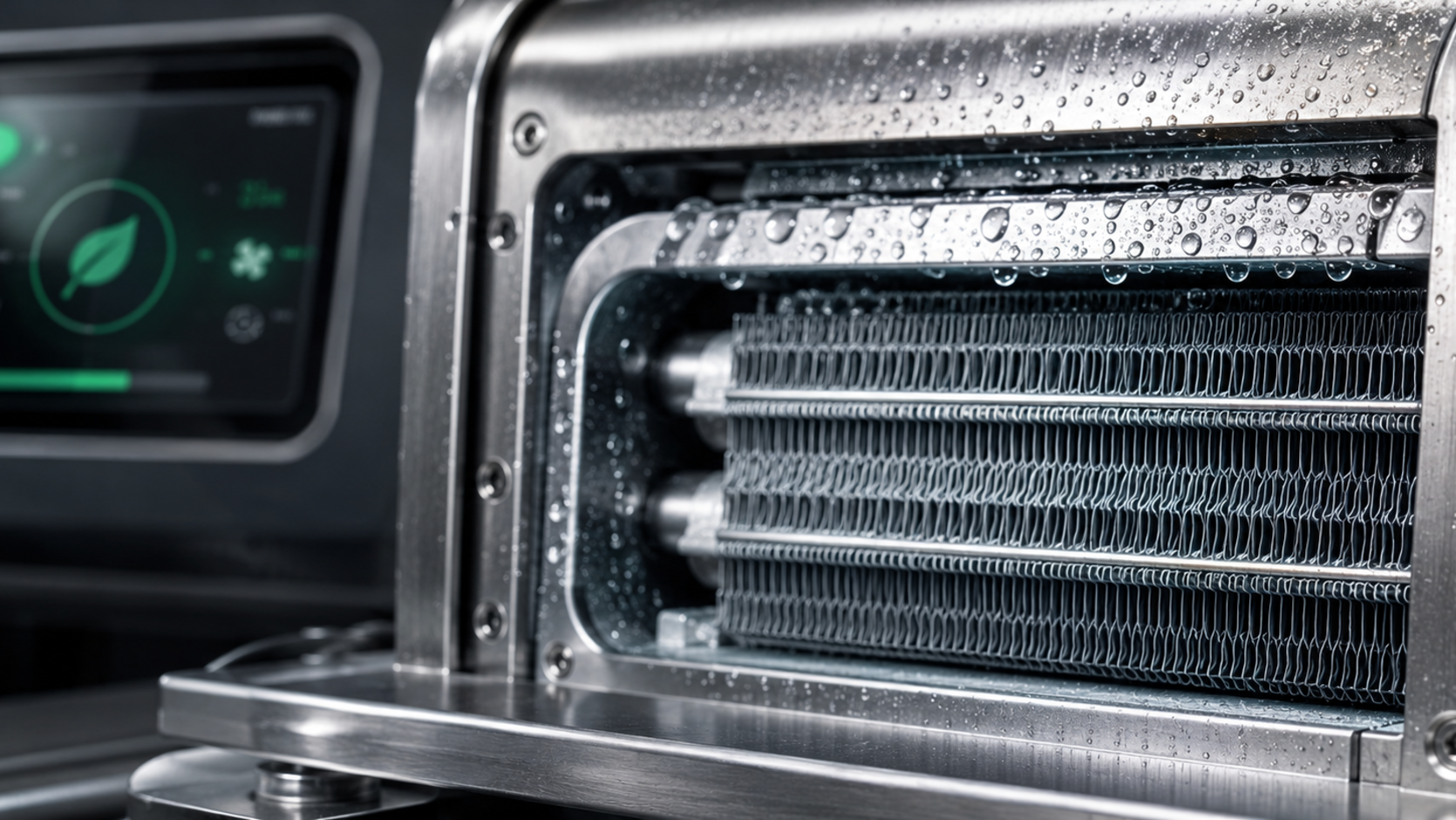
Next-generation green shipping laundry systems deploy closed-loop heat pump drying technologies. Instead of continuously heating cold ambient air, these units recirculate air through an internal closed circuit. A compressor dehumidifies the warm air, extracts the moisture, and continuously reheats the dry air. This thermodynamic cycle slashes electrical energy consumption by up to 60%, drastically reducing the load on the ship's auxiliary diesel generators.
Airflow and Exhaust Engineering
Properly ducting laundry heat extraction is crucial for maintaining the vessel's internal thermal balance. Integrating high-efficiency dryers with moisture-trap heat exchangers allows the extracted heat to be repurposed to pre-heat incoming domestic water lines, turning a historical energy sink into a highly productive thermal recovery loop.
Technical Equipment Integration and Carbon Intensity Indicator (CII) Impact
Under the International Maritime Organization (IMO) framework, a vessel’s Carbon Intensity Indicator (CII) rating determines its operational legality. Every gram of fuel saved by auxiliary systems directly lowers the ship's overall carbon emissions score.
Transitioning to advanced marine laundry systems directly influences this rating by decreasing the daily auxiliary load. By adopting optimized configurations, operators ensure that power-hungry laundry tasks do not trigger peak-load generator demands. These savings perfectly complement macro-level vessel efficiency measures, such as the comprehensive energy efficiency solutions on yachts that optimize fuel consumption and extend operational range.
When ruggedized, AISI 316L stainless steel laundry units operate with intelligent power management, they reduce continuous fuel burn, directly assisting the vessel in maintaining an elite, compliance-ready CII tier during stringent port authority reviews.
Sustainable Infrastructure as an Operational Edge
Minimizing the environmental impact of shipboard laundry requires a deliberate transition from wasteful, legacy appliances to closed-loop, resource-efficient marine engineering. By prioritizing low-water technology, closed-loop heat recovery dryers, and strict eco-chemical management, maritime operators protect the marine ecosystem while simultaneously cutting fuel costs. Implementing these sustainable utilities safeguards long-term fleet compliance, optimizing resource efficiency from the laundry room to the main engine room.