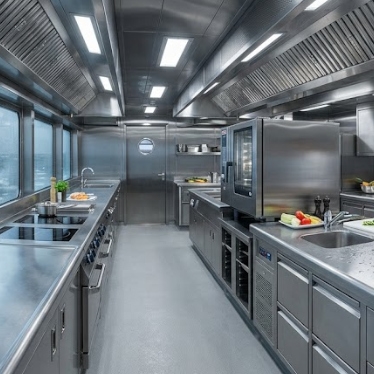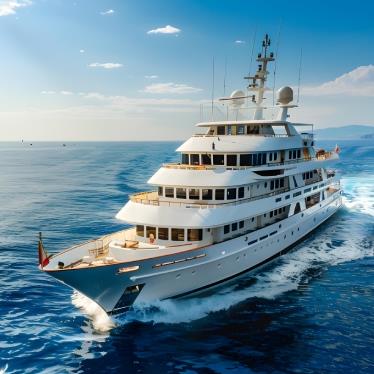
Whether designing for a commercial freighter, a luxury yacht, or a large cruise ship, the selection of marine galley equipment is a critical decision that directly impacts operational efficiency and regulatory compliance. Unlike land-based kitchens, a ship galley kitchen must operate flawlessly under constant motion, high humidity, and corrosive saline conditions. Choosing the right equipment involves balancing high-performance output with strict safety standards and space-saving ergonomics.
Material Integrity: The Marine Standard
In the maritime industry, durability is synonymous with safety. The harsh environment dictates that all galley equipment in ship operations must be constructed to withstand extreme conditions.
-
AISI 316L Stainless Steel: This high-grade material is essential for all surfaces and equipment casings due to its superior resistance to salt-spray corrosion.
-
Rounded Corners: To prevent injuries during vessel movement and to simplify cleaning, all stainless steel furniture and equipment should feature rounded edges and smooth finishes.
-
Structural Robustness: Equipment must be designed to be securely bolted or welded to the deck to remain stable during heavy seas.
Core Categories of Galley Equipment
Cooking and Heating Units
Modern cooking solutions emphasize safety and speed.
-
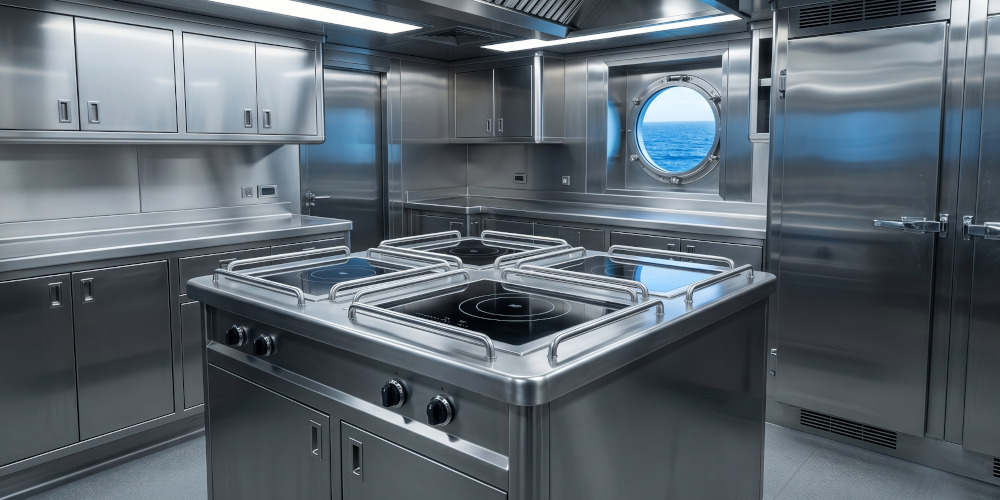
Induction Technology: Highly recommended for modern vessels to reduce ambient heat and eliminate open flames.
-
Marine Safety Features: Cooking ranges must be equipped with adjustable pot holders and storm rails to prevent cookware from sliding during vessel rolling.
-
Modular Design: Equipment should be compact enough to fit through standard bulkheads while providing the high-volume output required for large crews.
Marine Refrigeration Systems
Refrigeration on a ship is not just about cooling; it is about food safety during long voyages.
-
Marine Compressors: Units must utilize compressors specifically designed to operate at varying angles of heel and trim.
-
Secure Latches: Doors must feature heavy-duty, marine-grade locking latches to ensure they do not swing open during rough weather.
Dishwashing and Sanitation
Efficient cleanup is vital for maintaining hygiene in the confined environment of a galley equipment in ship setting.
-
High-Speed Cycles: Marine dishwashers are engineered for rapid turnaround and low water consumption to conserve the vessel's freshwater supply.
-
Ergonomic Workstations: Prep tables and sinks should be integrated into a seamless workflow that minimizes movement and maximizes productivity in tight spaces.
Ergonomics and Safety in Tight Spaces
Effective yacht galley design focuses on maximizing utility without compromising the safety of the culinary team.
-
Grab Bars and Rails: Strategically placed handrails help crew members maintain balance while working in a moving kitchen.
-
Smart Storage: Utilizing vertical space with secure shelving and specialized racks prevents items from becoming projectiles in high seas.
-
Ventilation Efficiency: High-performance hoods are necessary to manage smoke and moisture, preventing condensation on electronic navigation systems and improving air quality.
Conclusion: Achieving Operational Excellence
Selecting the right galley equipment is an investment in the long-term success of maritime operations. By prioritizing 316L stainless steel construction, marine-specific safety features, and ergonomic space planning, operators ensure a kitchen that is both a productive workspace for the crew and a reliable asset for the ship. Compliance with international standards is not just a formality; it is the foundation of a safe and efficient life at sea.