The International Maritime Organization (IMO) has set ambitious decarbonization and marine protection targets for 2030, challenging ship operators to fundamentally transform onboard environmental practices. While fuel transition and propulsion efficiency dominate green shipping headlines, auxiliary waste processing infrastructure plays an equally critical role in meeting these sustainability milestones.
Deploying advanced green ship technology allows commercial vessels, offshore platforms, and luxury superyachts to eliminate ocean pollution, reduce fuel-intensive waste transportation, and streamline compliance with evolving international maritime frameworks.
The IMO 2030 Framework and Onboard Ecological Responsibility
Achieving the IMO 2030 sustainability mandate requires a holistic approach to shipboard emissions, resource recovery, and zero-plastic discharge protocols.
Zero-Discharge Operational Mandates: Regulatory frameworks are rapidly narrowing permissible discharge zones. Modern fleet operations must eliminate untreated solid, organic, and hazardous waste streams to safeguard marine ecosystems.
Carbon Footprint Reduction via On-Board Volume Reduction: Storing and transporting uncompacted waste requires substantial deck space and increases vessel displacement, which indirectly elevates fuel burn. Efficient processing minimizes waste volume right at the source.
Synergy with Global Conventions: Sustainable waste infrastructure directly supports wider environmental regulations, aligning fleet operations with strict compliance guidelines such as MARPOL Annex V compliance standards.
Technical Solutions Driving IMO 2030 Compliance
To transform environmental objectives into daily operational reality, naval architects and technical managers specify heavy-duty, marine-engineered processing systems designed for high-throughput waste reduction.
Organic Waste Handling and Maceration
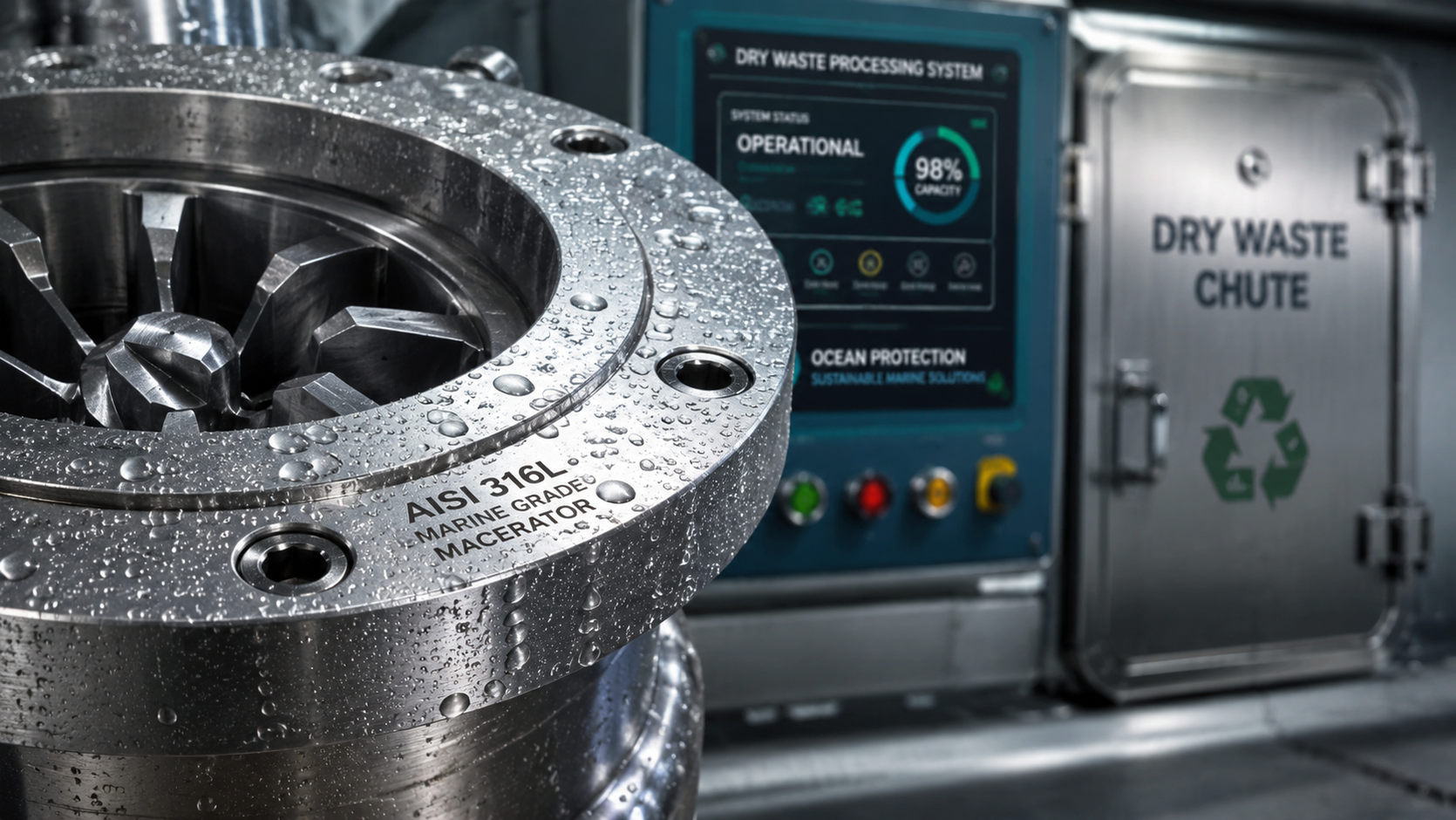
Food waste generated in crew galleys presents severe biological risks if stored improperly. Utilizing a heavy-duty food waste macerator allows operators to grind organic waste into fine micro-particles before controlled discharge or bio-holding. This prevents microbial buildup, eliminates pest hazards, and guarantees compliance with sea-distance disposal rules.
Vertical Logistics via Chute Systems
Managing multi-deck waste transfer on large vessels can create operational bottlenecks and compromise interior hygiene. Integrating a dedicated chute system constructed from AISI 316L stainless steel enables seamless vertical waste routing from upper accommodation areas and galleys straight down to primary processing rooms, keeping public zones pristine.
Compact Dry Waste Processing
Cardboard, plastics, aluminum cans, and glass constitute a massive physical volume. Implementing heavy-duty dry waste management equipment—such as marine balers, shredders, and glass crushers—compresses dry recyclables by up to 80%, securing clean, odor-free storage during long ocean passages.
Operational Integration and Vessel Efficiency
Adopting fully integrated onboard waste management solutions provides vessel operators with a clear competitive advantage during Port State Control inspections and environmental audits.
By embedding high-capacity shredders, macerators, and vertical collection chutes into the early ship design or retrofit phase, yards optimize crew workflows and eliminate dangerous manual waste handling. Furthermore, lowering the weight and volume of stored refuse directly reduces auxiliary energy requirements, supporting higher Carbon Intensity Indicator (CII) performance tiers across global trade routes.
Sustainable Marine Infrastructure for 2030 and Beyond
Reaching IMO 2030 targets is an operational imperative that requires intelligent, reliable waste infrastructure. By integrating specialized marine food waste disposers, stainless steel chute networks, and heavy-duty dry waste compactors, vessel owners eliminate marine pollution risks while optimizing operational efficiency. Investing in marine-grade, eco-compliant processing technology ensures fleet readiness, regulatory compliance, and a cleaner ocean for the future.