Commercial galleys and shipboard food production spaces are among the most resource-dense operational zones on any vessel or land facility. High-output cooking ranges, continuous ventilation hoods, intensive refrigeration circuits, and high-temperature warewashing machines demand extraordinary amounts of power, potable water, and daily maintenance. In an operating landscape shaped by tightening environmental frameworks and carbon intensity targets, building a sustainable galley is no longer just an ecological goal it is a critical strategy for lowering operational overhead and extending equipment service life.
Creating an eco-friendly culinary space requires an integrated approach that connects smart floor planning with energy recovery, water stewardship, and circular material selection.
Transitioning to High-Efficiency Cooking Technology
Cooking appliances represent the largest direct energy consumer within a commercial galley. Replacing conventional radiant elements or gas burners with advanced thermal solutions immediately cuts power draw and kitchen heat generation.
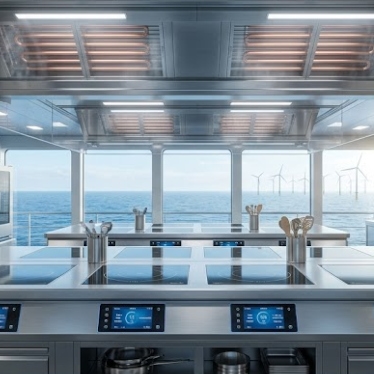
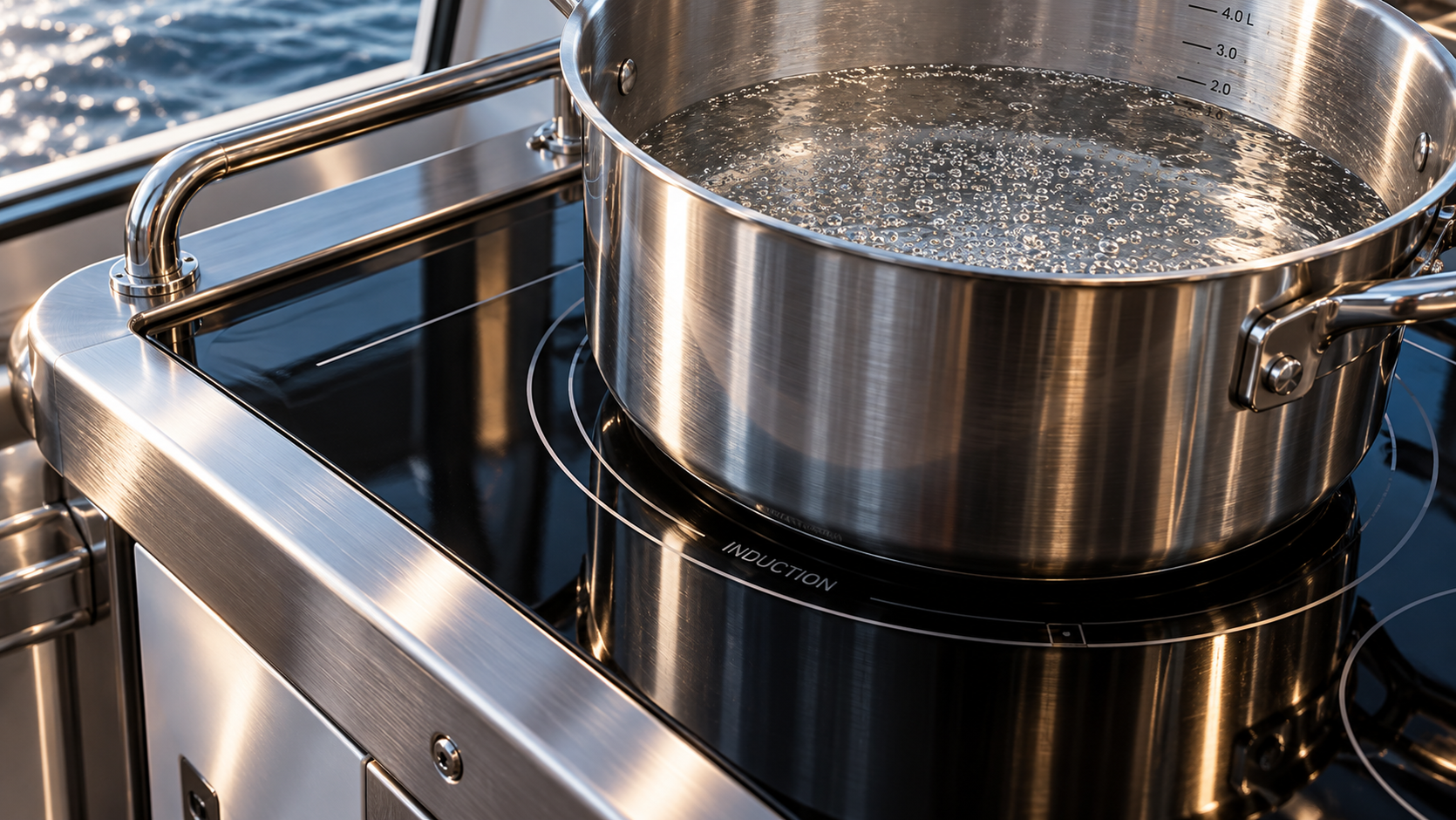
- Commercial Induction Hobs: Induction technology transfers electromagnetic energy directly to ferrous cookware with thermal efficiency rates exceeding ninety percent, compared to less than fifty percent for standard electric plates. Because open cooktop surfaces do not radiate ambient heat, galley spaces stay significantly cooler, cutting ventilation and air-conditioning loads in half.
- Programmable Combi Steamers: Modern combi ovens combine convection heat with variable steam injection, condensing cooking times and drastically reducing electricity use. Automated moisture sensors inject steam only when required, preventing unnecessary water and energy waste during batch cooking.
- Intelligent Demand-Controlled Kitchen Ventilation (DCKV): Traditional exhaust hoods run continuously at peak blower speed throughout the day. Demand-controlled ventilation systems use optic sensors and temperature probes to automatically modulate exhaust fan velocity, ramping up during high-smoke frying and throttling back during prep intervals.
Reducing Potable Water Consumption and Scullery Waste
Producing fresh water on commercial vessels and offshore platforms requires fuel-intensive desalination or reverse-osmosis processing. Galleys that cut water waste directly lower onboard auxiliary generator fuel consumption.
- Low-Water High-Temperature Warewashing: Modern conveyor and pass-through dishwashers use multi-stage counter-flow wash water recycling. By filtering and reusing final rinse water in the preceding wash stages, water usage drops to approximately two liters per wash cycle without compromising sanitizing temperatures.
- Integrated Heat Recovery Condensers: Premium marine dishwashing machines incorporate integrated heat exchangers that capture scalding exhaust steam before the hood opens. This process condenses airborne vapor while preheating incoming cold rinse water, reducing booster heating demands.
- Laminar-Flow Pre-Rinse Stations: Replacing standard high-pressure spray aerators with flow-regulated, low-dispersion laminar spray nozzles cuts scullery water consumption while eliminating airborne bacterial misting.
Sustainable Materials and Circular Metallurgy
True sustainability begins during the procurement and manufacturing stages. Kitchen components must be durable enough to withstand continuous thermal shock and marine vibration without premature replacement:
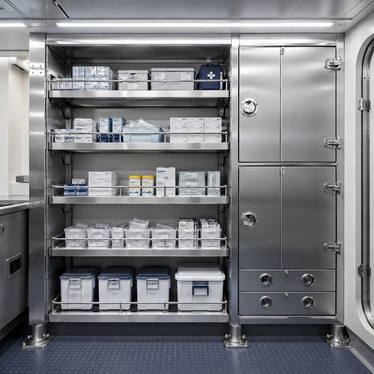
- Indefinitely Recyclable Stainless Steel: Specifying premium AISI 304 and AISI 316L stainless steel ensures maximum mechanical endurance against aggressive sanitizers and saline exposure. High-grade stainless steel retains long-term asset value and is entirely recyclable at the end of a vessel’s operational lifecycle.
- Modular and Demountable Outfitting: Equipment designed with standardized modular dimensions allows modular refurbishment, enabling operators to upgrade internal heating elements or compressors without scrapping entire counter structures. This aligns with broader initiatives driving green technology and sustainable solutions in the maritime industry.
- Eco-Friendly Thermal Insulation: Refrigeration cabinetry and holding wells should be insulated with high-density cyclopentane-blown polyurethane foam featuring zero ozone depletion potential (ODP) and negligible global warming impact.
Smarter Spatial Layout and Ergonomic Workflows
Layout geometry determines how hard kitchen equipment must work. Separating thermal extremes avoids conflicting energy cycles:
- Thermal Zoning: Grouping intense heat sources such as bratt pans, combi ovens, and deep-fat fryers under centralized extraction canopies separates them from walk-in cold rooms and refrigerated prep counters. Placing refrigeration units next to hot ranges forces compressors to cycle continuously, increasing power consumption and shortening component lifespans.
- Straight-Line Scullery Logistics: Arranging waste scraping, loading, washing, and dish drying in a continuous one-way flow speeds turnaround times, allowing warewashers to run full batches rather than inefficient half-empty cycles.
Engineering for Long-Term Operational Performance
Designing a sustainable commercial galley goes far beyond installing energy-saving labels. It requires engineering durable, resource-conserving hardware into a layout that actively supports crew efficiency. By uniting precision induction cooking, advanced heat recovery dishwashing, closed-loop water management, and high-grade recyclable stainless steel architecture, kitchen operators protect the environment while securing long-term operational resilience.